Jan 14, 2026
Pneumatic cylinders are widely used in industrial automation due to their simple structure, high reliability, and controllable cost. However, when operating in high-temperature environments, standard cylinders often face problems such as seal failure, air leakage, unstable movement, and significantly shortened service life.
This article will systematically explain the key technical considerations for achieving stable, long-term operation of cylinders under high-temperature working conditions from an engineering application perspective, covering aspects such as seal materials, lubrication methods, pneumatic systems, air pressure control, and structural design.
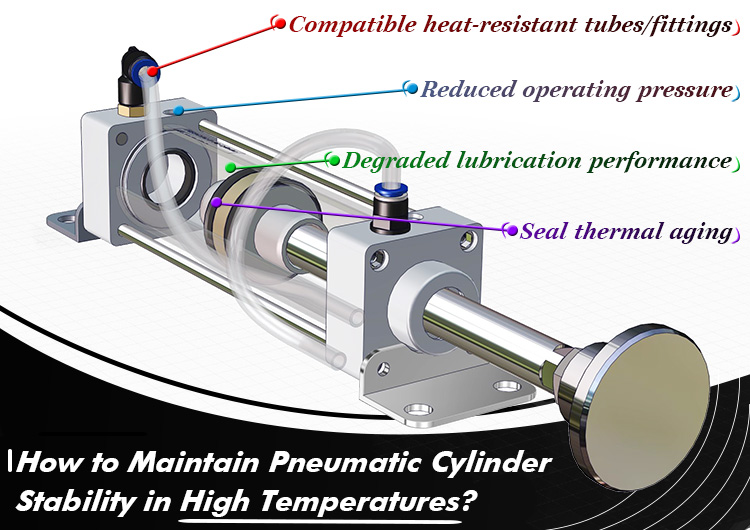
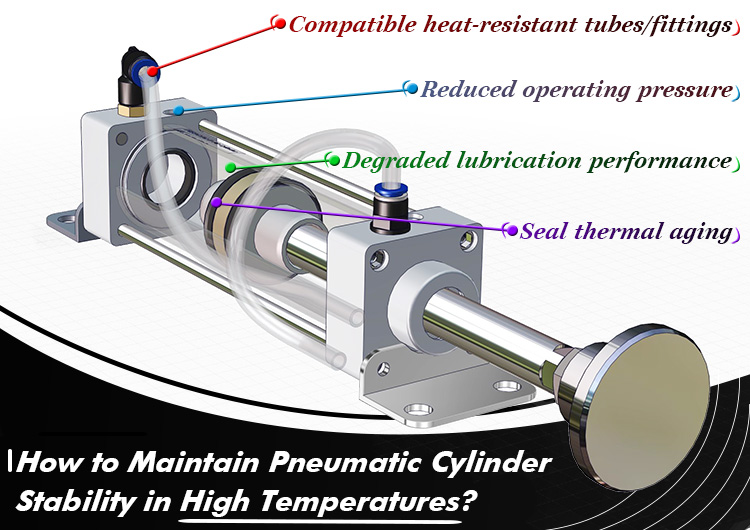
High temperature affects cylinders in multiple ways, impacting not just a single component but the entire pneumatic system.
◆Thermal Aging of Seals: In high-temperature environments, seals age faster, leading to reduced elasticity or even cracking, which severely compromises sealing performance. This is often the main cause of air leakage and insufficient thrust in cylinders operating under high temperatures.
◆Consideration for Supporting Equipment: The pipes, fittings, brackets, and other supporting equipment supplying air to the cylinder must also meet the environmental temperature requirements for the entire pneumatic system to function properly.
◆Degradation of Lubrication: Standard pneumatic lubricants tend to evaporate or thin out at high temperatures, making it difficult for them to provide effective lubrication. This can cause friction and sticking in the cylinder, severely affecting operational stability and cylinder lifespan.
◆Reduced Working Pressure: A common characteristic of all metal materials is that their yield strength and tensile strength decrease significantly as temperature rises. Maintaining high working pressure in high-temperature environments greatly increases the risk of plastic deformation in key components (such as cylinder tube bulging), thread failure, or even bursting, seriously endangering safety.
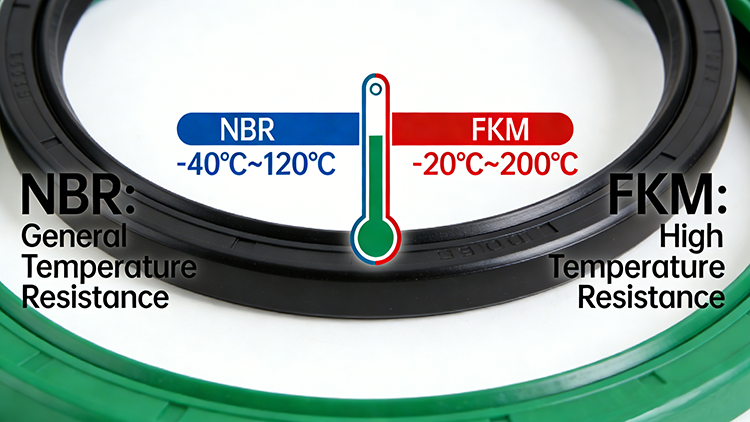
The metal parts of a cylinder can generally withstand higher temperatures and are less sensitive to temperature changes, but the sealing components have poorer high-temperature resistance. Therefore, the selection of seal material is the core factor determining cylinder reliability.
NBR (Nitrile Rubber) is one of the most commonly used seal materials in pneumatic systems due to its excellent oil resistance, wear resistance, elasticity, mature manufacturing processes, and relatively low cost. Its temperature resistance range is approximately -20°C to 100°C, with short-term tolerance up to 120°C. At higher temperatures, it becomes brittle, significantly affecting performance, necessitating seal replacement.
When temperatures exceed 100°C, FKM (Fluorocarbon Rubber) seals become the preferred choice. They can withstand temperatures up to 200°C and offer good overall performance, meeting the needs of the majority of high-temperature environments, though they are more expensive than NBR.
Even if the cylinder body itself has high-temperature resistance, the system will still struggle to operate stably if the external pneumatic lines are not matched.
PU (Polyurethane) Tubing is the most commonly used hose in pneumatic systems due to its excellent overall performance and outstanding abrasion resistance. However, it is not designed for high-temperature environments. Aging accelerates above 80°C, and it is strongly recommended not to use it in environments consistently exceeding 90°C or 100°C.
For temperatures above 80°C but below 120°C, PA6 or PA66 (Nylon) Tubing can be used. They can withstand temperatures up to 150°C for short periods, and their working pressure rating is also higher than PU tubing.
For more extreme temperatures, it is necessary to use PTFE (Teflon) Tubing or other materials from the fluoroplastic family. Under conditions without heavy loads or media corrosion, PTFE can intermittently withstand instantaneous temperatures as high as +300°C without catastrophic failure, although long-term exposure at such temperatures will accelerate performance degradation.
Note that the pressure rating of hoses also decreases under high-temperature conditions.
Standard plastic quick-connect fittings pose significant risks in high-temperature environments. Above approximately +60°C, their material strength and rigidity decrease markedly, making them prone to creep deformation. This can lead to loosening at connections, leakage, or even softening and failure of the fitting body itself. Therefore, they are not recommended for environments where temperatures consistently exceed 60°C.
For moderately high-temperature environments, brass or nickel-plated brass fittings are recommended. They offer a good balance of performance and cost-effectiveness for most industrial settings. The metal body can withstand much higher temperatures than plastic, but the NBR seal inside them is the weak point for temperature resistance, with a long-term tolerance of about 80–100°C. Nickel plating primarily serves aesthetic purposes and improves corrosion resistance, with little effect on temperature tolerance.
For more extreme environments, stainless steel fittings are necessary. While their temperature resistance is also limited by the seals, they typically use internal FKM seals, which can withstand temperatures up to 200°C.
The lubrication strategy for cylinders directly affects movement smoothness, seal life, and equipment reliability. Standard pneumatic oils or greases used in ordinary cylinders tend to fail in high-temperature environments, so optimization for high temperatures is essential.
High-Temperature Lubricants: Depending on needs, one can use high-temperature synthetic pneumatic oil (suitable for 150°C – 200°C) or perfluoropolyether (PFPE) based fluorinated grease (suitable for 200°C – 260°C).
Lubrication-Free or Self-Lubricating Cylinders: Alternatively, one can opt for lubrication-free or self-lubricating cylinders. These typically use wear-resistant, low-friction materials such as PTFE or filled PTFE for seals, eliminating the need for grease and allowing operation in high-temperature or clean working conditions.
This is often the most easily overlooked point. The main pressure-bearing components of a cylinder, such as the cylinder tube, piston rod, and end caps, are made of metal. As mentioned, all metals experience a significant decrease in yield strength and tensile strength as temperature rises.
Although cylinders usually have sufficient safety margins, continuing to use the room-temperature rated working pressure at elevated temperatures still implies higher risk. For instance, it may cause plastic deformation of key components (like tube bulging), thread failure, or even cylinder tube cracking, seriously endangering production safety.
It is crucial to strictly follow the manufacturer's recommendations or the temperature-pressure curve charts provided in technical manuals. For example, a cylinder rated for 1.0 MPa working pressure at room temperature might have its allowable maximum working pressure limited to 0.6-0.7 MPa in a 150°C environment.
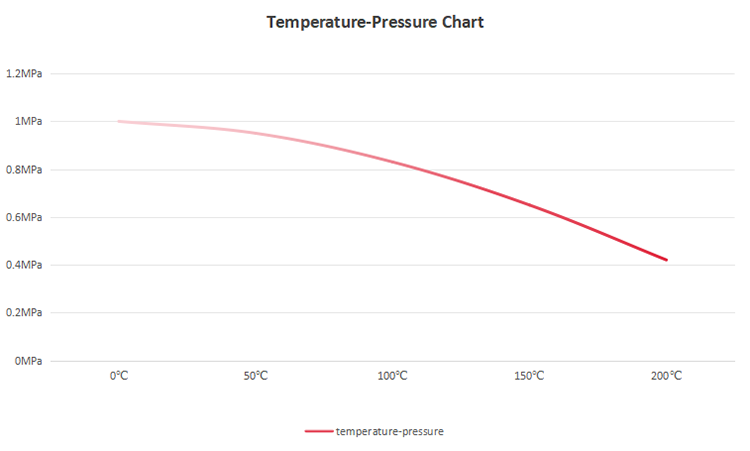
Therefore, in high-temperature environments, one should avoid operating near the maximum rated pressure and strictly control air pressure fluctuations by installing devices like pressure regulators.
An additional consideration is: if a cylinder needs to maintain relatively high pressure to provide sufficient output force and must operate in a high-temperature environment, how should one choose a suitable cylinder?
One method is to increase the cylinder bore, and another is to increase the cylinder tube wall thickness. The former achieves the same output force with lower pressure, while the latter enhances the cylinder's pressure resistance to ensure safety. For more information on this topic, you can visit resources like "Pneumatic Air Cylinder Force Calculation"
Ensuring the stable operation of pneumatic cylinders in high-temperature environments is not reliant on a single factor but is a systemic engineering challenge. Only through comprehensive optimization in areas such as seal materials, lubrication methods, heat-resistant pneumatic components, air pressure control, and structural design can long-term, reliable operation be truly achieved.
Fully considering high-temperature factors during the selection and design stages can not only improve equipment stability but also effectively reduce maintenance costs and downtime risks.
Fokca(Fescolo)is a pneumatic cylinder supplier. As a leading Chinese supplier in this field, we specialize in providing high-quality, precision-engineered cylinders designed for a variety of applications.
Our products are widely used in robotics, automation, and other industries where compact and efficient solutions are essential. If you want to learn more about cylinders and their benefits in applications, please contact us.We offers a wide range of articles, videos and other resources on cylinders to help you better understand their working principles. You can visit more articles.
(FK9009)
 How to Control a Pneumatic Cylinder Use a 5/2 Way Valve
 Rotary Clamping Cylinder Troubleshooting: Ensuring Consistent Performance
 How Does the Rotary Clamp Cylinder Work?
 How to Maintain Pneumatic Cyinder Stability in High Tempurature?
 How to Safely Disassemble a Pneumatic Cylinder for Maintenance and Inspection

Whatsapp QR:

WeChat QR:

Tell us about your application requirements. Our engineers will review your project and provide practical feedback within 1–2 working days.

Fescolo is the specialized custom pneumatic cylinder brand operated by Ningbo Fokca Automation Co., Ltd.
Looking for standard pneumatic and automation components?
Visit Fokca
© 2026 Ningbo Fokca Automation Co., Ltd. All Rights Reserved. Sitemap