Aug 01, 2025
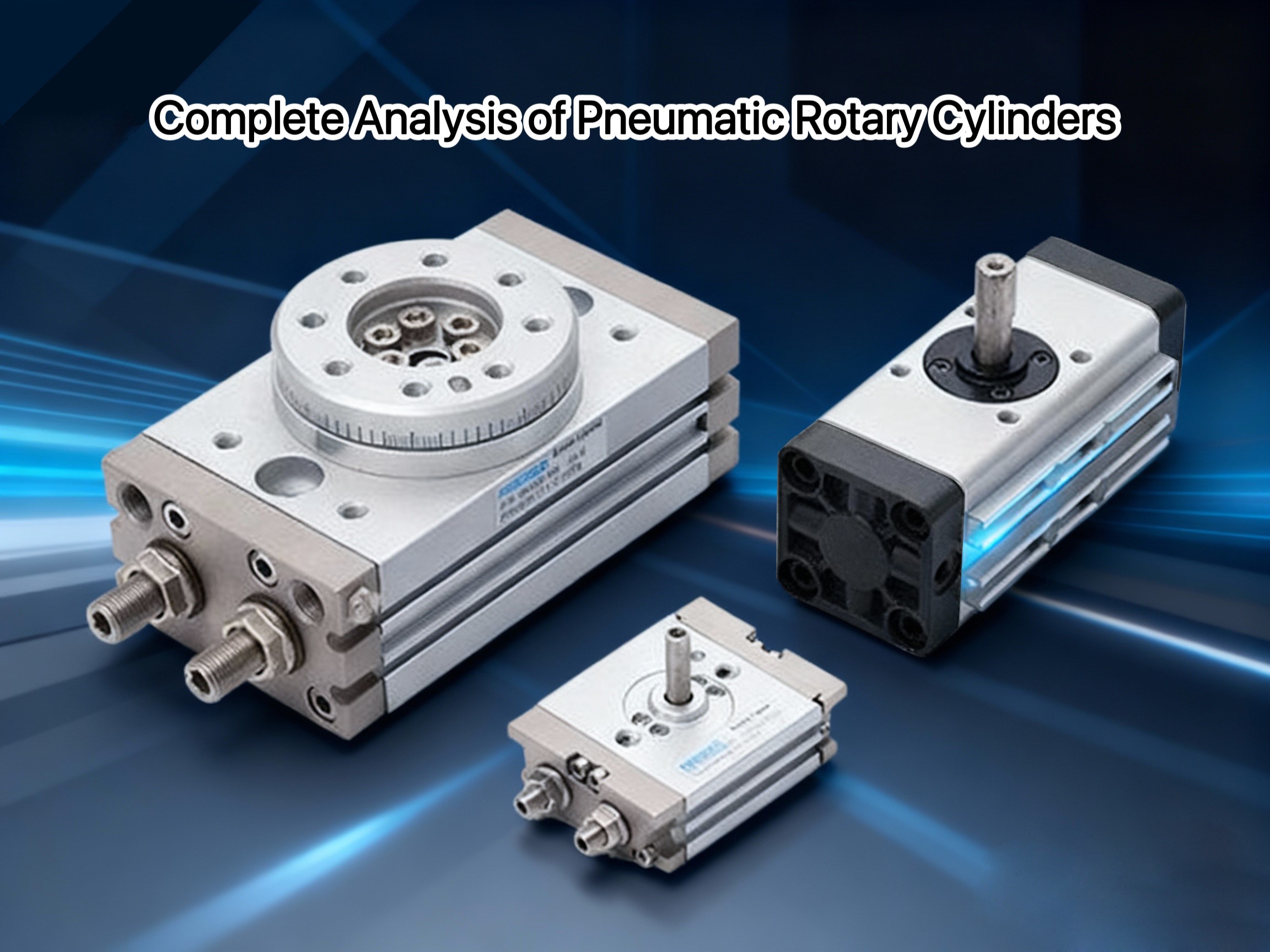
According to their motion type, pneumatic cylinder motions can be divided into linear actuators and rotary actuators. This article will introduce another type rotary actuator, which stands as an important milestone in the manufacturing industry's evolution from simple actions to multi-axis coordination and flexible operations.
Pneumatic rotary actuators feature high torque and fast response, converting compressed air pressure into rotary motion through vane, rack-and-pinion, or screw designs.It can perform rapid and powerful reciprocating swings within a limited angle, effectively meeting automation scenarios such as opening or closing a ball valve, or transferring workpieces from one conveyor belt to another.
With a compact structure and controllable rotation angle, pneumatic rotary actuators are widely applied across various industrial systems. In this article, we will explain their working principle, advantages, types, and applications in different systems.
What is a pneumatic rotary cylinder?A rotary cylinder is a type of pneumatic actuator that uses electrical energy or fluid pressure—here specifically compressed air—as the driving force to move pistons, vanes, or rack-and-pinion mechanisms to produce rotational motion. Its core function is to convert pneumatic energy into mechanical energy, enabling angular positioning or continuous rotation of a load.
The double-chamber design is the most common for rotary actuators to achieve rapid response. The two chambers are alternately pressurized, allowing the central rotating structure to perform bidirectional rotation. In addition, single-chamber and triple-chamber designs also exist.
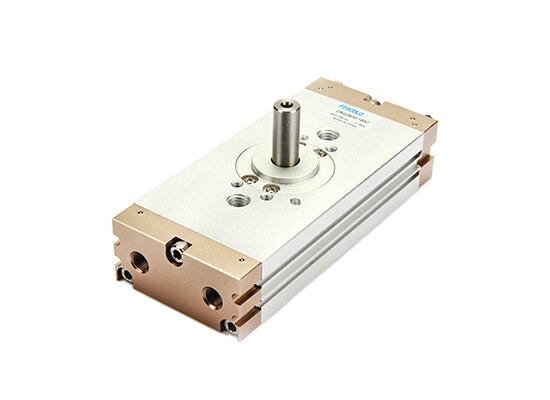
The core working mechanism of a pneumatic rotary actuator is to convert the pressure energy of compressed air into mechanical rotational motion.
Compressed air enters the actuator's internal chambers, driving internal mechanisms such as pistons, vanes, rack-and-pinion, or linkages, which in turn rotate the circular output shaft at an adjustable angle. The output shaft is connected to the load via a keyway, enabling angular positioning or continuous rotational motion of the load.
Rotary cylinders differ in their driving principles and output forms, making them suitable for various application scenarios. You should choose the appropriate type of rotary cylinder based on your specific operational needs.
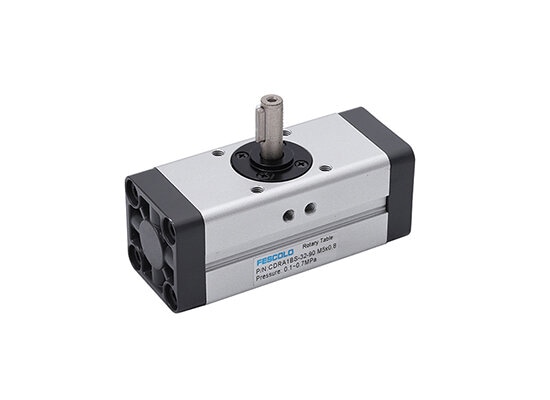
Vane Type Rotary Cylinder: Uses compressed air to drive internal vanes to rotate, providing torque output. Suitable for short-stroke, high-speed rotation applications.
Rack-and-Pinion Type Rotary Cylinder: Converts the linear motion of a piston into rotational motion via a rack-and-pinion mechanism. Offers high torque and precise positioning.
Oscillating Type Rotary Cylinder: Provides limited-angle oscillating motion of the output shaft, ideal for indexing, flipping, or angle-limited applications.
◆ Compact structure with high torque density
◆ Fast response and precise control
◆ Excellent environmental durability and low maintenance
◆ Modular design with options for intelligent integration
◆ Rotational motion output
◆ Indexing and positioning control
◆ Simple structure that saves space
◆ Seamless integration into automated systems
◆ Automated production lines
◆ Packaging machinery
◆ Robotic joints and manipulators
◆ Medical devices
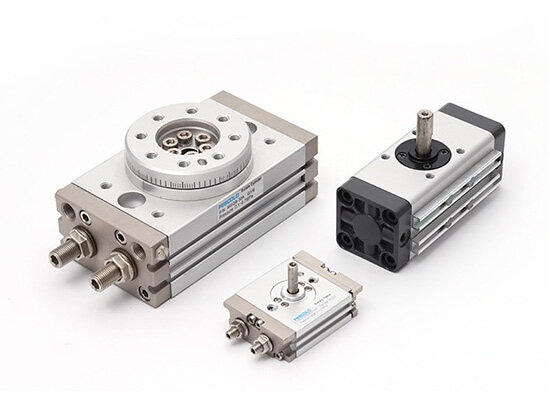
Thanks to its high torque density, precise control, and environmental resilience, the pneumatic rotary cylinder has become a core component for rotational motion control in industrial automation. When selecting a rotary cylinder, it is important to match the product series to factors such as load, speed, and rotation angle. It's also recommended to prioritize suppliers that offer localized technical support to reduce overall costs.
In addition, Fescolo also offers a wide range of other pneumatic products, including standard cylinders, guided cylinders, rotary cylinders, anti-rotation cylinders, as well as pneumatic valves, tubing, and fittings.
We are a modern enterprise specialized in the R&D and manufacturing of pneumatic products, equipped with advanced automated production lines, precision quality control systems, and comprehensive inspection facilities. The company is committed to a technology-driven and customer-focused philosophy, continually advancing independent design and product innovation.Contact us for more information!
Over the years, we have built strong partnerships with clients across Europe, Southeast Asia, the Americas, and the Middle East, delivering reliable pneumatic automation solutions to a wide array of industries—including industrial automation, packaging, automotive, electronics, medical equipment, and food processing.In addition, Fescolo also offers a wide range of other pneumatic products, including standard cylinders, guided cylinders, rotary cylinders, anti-rotation cylinders, as well as pneumatic valves, tubing, and fittings.

Whatsapp QR:

WeChat QR:

Tell us about your application requirements. Our engineers will review your project and provide practical feedback within 1–2 working days.

Fescolo is the specialized custom pneumatic cylinder brand operated by Ningbo Fokca Automation Co., Ltd.
Looking for standard pneumatic and automation components?
Visit Fokca
© 2026 Ningbo Fokca Automation Co., Ltd. All Rights Reserved. Sitemap