Jun 24, 2025
Pneumatic air tubing, also known as pneumatic tubing, is one of the core components of a pneumatic pipeline system. It forms the network through which compressed air is transmitted and serves as the conduit that directs the flow of air. Pneumatic tubing plays a crucial role in ensuring the efficiency and flexibility of pneumatic systems.
Pneumatic piping serves as the circulatory system of all compressed air networks—from factory automation to hospital pneumatic tube systems. In this guide, you will learn about:
◆ Common materials used for pneumatic tubing and selection recommendations
◆ Size and specification selection guidelines
◆ Comparative analysis: pneumatic vs. hydraulic piping
◆ Installation tips and precautions
◆ Maintenance and troubleshooting advice
◆ Typical application cases
◆ Conclusion
Whether you're planning a new installation or optimizing an existing network, this comprehensive guide will help you select, size, install, and maintain your pneumatic piping system.
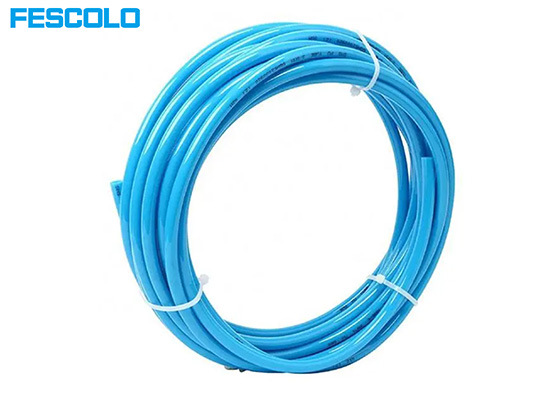
Pneumatic tubing is specifically designed to transport compressed air or inert gases and is typically used in conjunction with quick-connect fittings. Unlike piping systems used for liquid media, pneumatic tubing enables fast and safe transmission of the working medium.
Compressed Air Generation: A compressor produces a stable and clean air supply.
Air Delivery: The compressed air is transported through a sealed piping system to various end components.
Flow Direction Control: Solenoid valves open or switch the airflow direction based on electrical signals from a PLC or manual button operation.
Actuator Operation: Cylinders or pneumatic motors receiving the airflow generate linear or rotary motion, performing actions such as pushing, clamping, or lifting.
Exhaust and Reset: Excess air is vented to the atmosphere through exhaust ports and tubing.
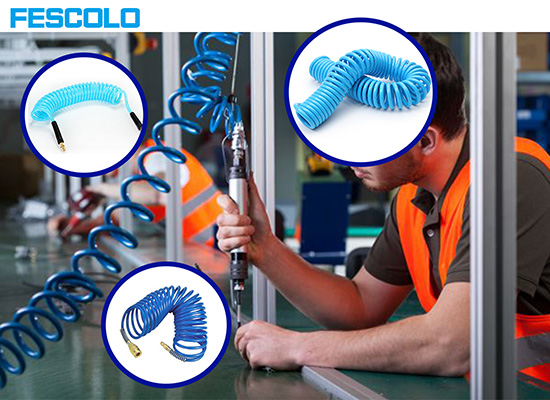
PU Tubing: Flexible, lightweight, and kink-resistant; suitable for automation equipment and robotics.
Nylon Tubing: Pressure-resistant, heat-resistant, and dimensionally stable; ideal for construction machinery and the automotive industry.
Polyolefin Tubing: Flame-retardant, heat-shrinkable, and protective; used in electronics, electrical systems, and medical devices.
Fluororesin Tubing: High-temperature resistant, chemically resistant, and corrosion-resistant; suitable for chemical processing, semiconductors, and laboratories.
PVC Tubing: Transparent, cost-effective, and suitable for use at room temperature; used in civilian applications, laboratories, and food-grade equipment.
Rubber Hose: Highly durable, shock-resistant, and wear-resistant; ideal for compressors, mining, and welding equipment.
Choosing the correct size and specification of pneumatic tubing is essential to ensure adequate flow, sealing performance, and overall system safety. Below are three key parameters to consider when selecting pneumatic hoses:
Outer Diameter (OD):
Determines the compatible fitting type and size.
Inner Diameter (ID):
Affects airflow capacity and pressure drop across the system.
Working Pressure:
Should be selected based on the system's maximum operating pressure, with a proper safety margin included.
| 1/8'' | 3.2mm |
| 5/32'' | 4mm |
| 3/16'' | 6mm |
| 1/4'' | 8mm |
| 5/16'' | 10mm |
| 3/8'' | 12mm |
| 1/2'' | 16mm |
Based on the size comparison table above,you need to specify the thread size of your pneumatic tube.
Tips
Use elbow fittings or bend sleeves to replace tight-angle hard bends.
Avoid placing pneumatic tubing near high-temperature components.
Regularly inspect quick connectors for signs of loosening, air leakage, or aging.
Pneumatic tubing does not have the high strength of metal hydraulic pipes. However, it is lightweight, easy to install, and typically used in applications with lower pressure requirements.
Clean the fittings and tube ends before connection.
Insert the tubing straight in until you hear a "click" sound.
Avoid sharp bends and excessive stress on the tubing.

Whatsapp QR:

WeChat QR:

Tell us about your application requirements. Our engineers will review your project and provide practical feedback within 1–2 working days.

Fescolo is the specialized custom pneumatic cylinder brand operated by Ningbo Fokca Automation Co., Ltd.
Looking for standard pneumatic and automation components?
Visit Fokca
© 2026 Ningbo Fokca Automation Co., Ltd. All Rights Reserved. Sitemap