Jan 15, 2026
Nylon tubes are widely used in pneumatic systems because of their high pressure resistance, good dimensional stability, and excellent chemical compatibility. From automated production lines to mobile equipment, pneumatic nylon tubes and nylon hoses are often chosen where reliability matters.
However, many performance issues reported in the field—such as unexpected hardening, dimensional changes, or premature cracking—are not caused by poor product quality, but by improper storage before installation.
Unlike some rubber or PVC pneumatic tubes, nylon materials are more sensitive to environmental conditions. Understanding how nylon behaves during storage is essential for distributors, equipment engineers, and end users who want consistent system performance.
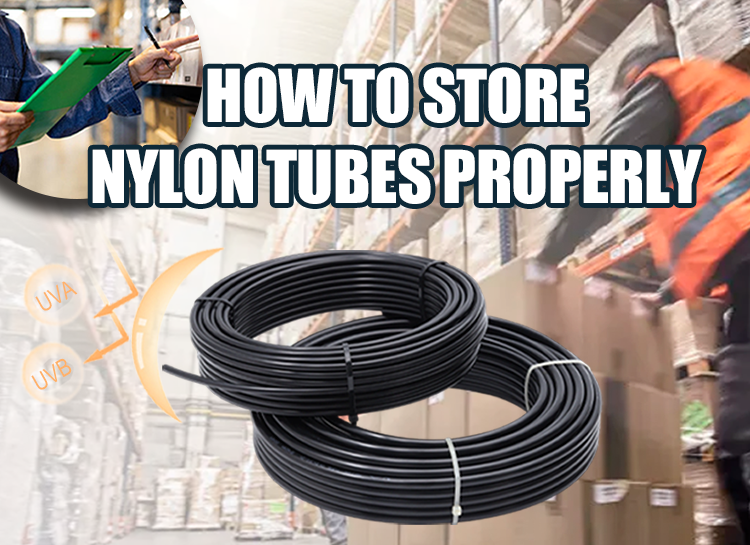
Nylon is a polyamide material, meaning its molecular structure contains amide bonds. These bonds provide strength and durability, but they are also sensitive to moisture, temperature, and ultraviolet exposure.
If storage conditions are not controlled, the material properties of a pneumatic nylon tube may change before it ever enters service, directly affecting sealing, pressure resistance, and service life.
In real industrial environments, nylon tubes are often stored for months—sometimes longer—by distributors or OEMs. Proper storage is therefore not an optional detail, but a critical part of quality control.
One defining characteristic of nylon is its relatively high water absorption rate compared to many other pneumatic tubing materials. When stored in humid environments, moisture gradually penetrates the polymer structure.
Over time, this can lead to hydrolysis, a chemical reaction where water molecules attack the amide bonds. As these bonds break, the material may experience:
◆Reduced mechanical strength
◆Loss of pressure resistance
◆Dimensional expansion, affecting outer diameter and wall thickness
For this reason, pneumatic nylon tubes should always be stored in a dry, well-ventilated indoor environment, with a recommended relative humidity below 60%. Warehouses without humidity control, especially in coastal or tropical regions, pose a higher risk.
For distributors and procurement managers, sealed packaging and controlled storage areas are often the simplest way to protect nylon hose inventory from moisture-related degradation.
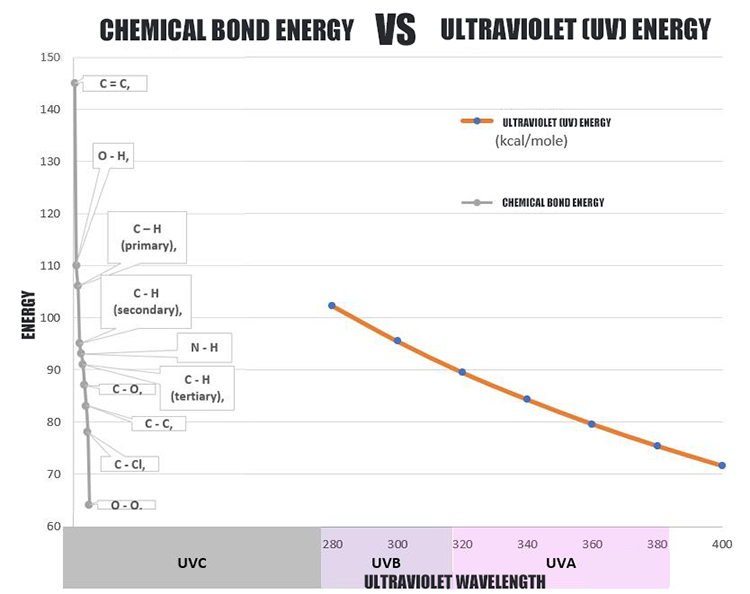
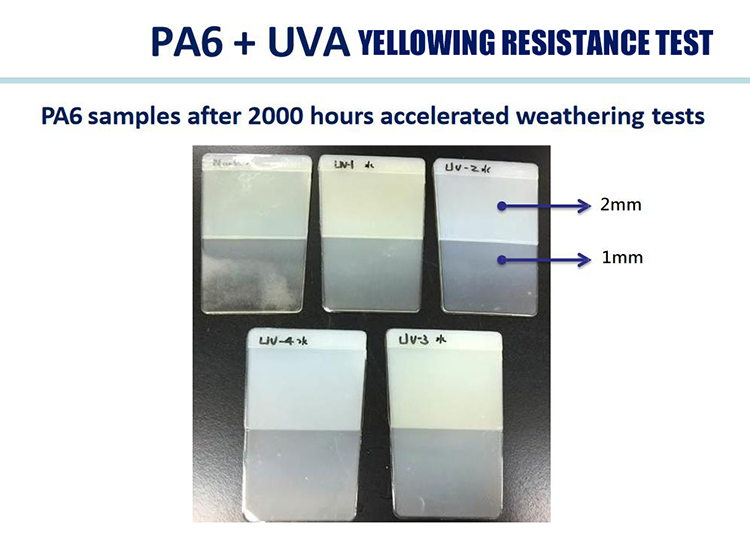
Sunlight affects nylon tubes in two ways. First, ultraviolet radiation accelerates oxidation, which may cause the tube surface to yellow or become brittle over time. Second, sunlight increases the local storage temperature, indirectly speeding up moisture-related chemical reactions.
Even when nylon hose products are stored indoors, exposure near windows or transparent roofing can still be significant over long periods. This is especially relevant for light-colored or transparent pneumatic tubes, where discoloration is often the first visible warning sign.
To maintain stable material properties, nylon tubes should be stored away from direct sunlight and strong artificial UV sources, preferably in shaded or enclosed storage areas.
While nylon tubing performs well across a wide operating temperature range during use, low-temperature storage presents a different challenge. At low ambient temperatures, nylon becomes stiffer and less impact-resistant.
If pneumatic nylon tubes are stored in cold warehouses or unheated environments, they may not show immediate damage. However, once handled, bent, or uncoiled, the risk of micro-cracking and surface fractures increases significantly.
For this reason, storage temperatures should remain within a moderate, stable range, avoiding prolonged exposure to freezing or near-freezing conditions. This is particularly important for distributors shipping nylon hose products to colder regions.
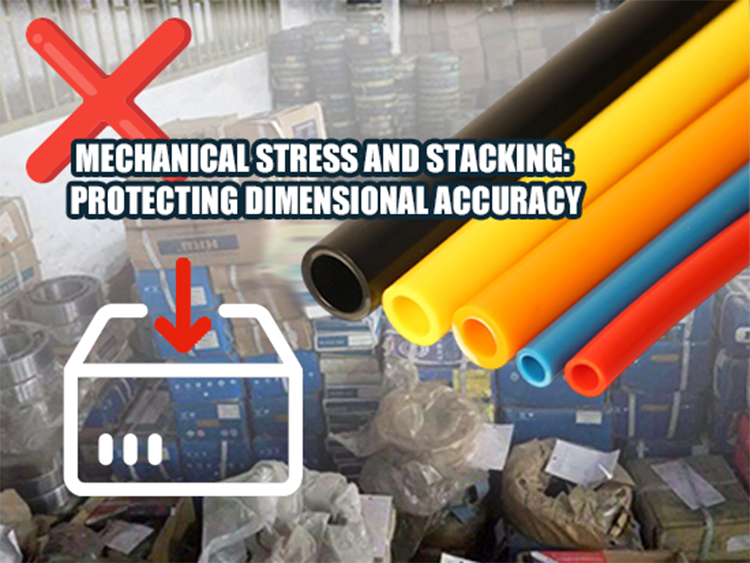
Another overlooked storage issue is mechanical deformation caused by improper stacking. Nylon tubes stored under heavy loads—especially when coiled—may gradually lose their roundness, leading to oval-shaped cross sections.
This loss of roundness directly affects:
◆Fitting compatibility
◆Sealing performance
◆Installation accuracy
To prevent deformation, pneumatic nylon tubes should be stored without excessive static loads, avoiding heavy stacking or compression. Large coils should be supported evenly, and long-term storage under weight should be avoided whenever possible.
| Storage Factor | Recommended Condition | Potential Risk if Ignored |
|---|---|---|
| Relative humidity | Below 60% RH | Hydrolysis, strength loss, dimensional expansion |
| Light exposure | No direct sunlight | Oxidation, yellowing, accelerated aging |
| Temperature | Moderate, stable | Brittleness, cracking risk |
| Mechanical load | No heavy stacking | Ovality, dimensional inaccuracy |
This combination of environmental control helps ensure that pneumatic nylon tubes maintain their original performance characteristics until installation.
Many users focus heavily on application conditions—pressure, temperature, and chemical exposure—while underestimating the importance of storage. In practice, storage-related degradation often determines how a nylon tube performs in service.
A pneumatic nylon tube that has absorbed moisture or suffered deformation during storage may still pass visual inspection, yet fail prematurely under pressure or during fitting installation. This is why experienced equipment engineers treat storage as part of the system design process, not merely a logistics detail.
Proper storage of nylon tubes is not complicated, but it requires discipline and awareness. By controlling humidity, light exposure, temperature, and mechanical stress, pneumatic nylon tubes can retain their original performance characteristics for extended periods.
For procurement managers and equipment builders, these practices translate directly into lower failure rates, fewer installation issues, and more reliable pneumatic systems—outcomes that matter long after the product leaves the warehouse.
(FK9026)
 Pneumatic Clamping Module Design in Packaging Machinery
 Pneumatic Fittings Replacement Cycle: How Often Should You Change Pneumatic Fittings
 Pneumatic Pusher Module Design in Pneumatic Packaging Machines
 Vacuum Filter and Response Time: Does Filtration Slow Down Vacuum Systems
 Metal Seated Pneumatic Ball Valve: When Is Metal Sealing Required?

Whatsapp QR:

WeChat QR:

Tell us about your application requirements. Our engineers will review your project and provide practical feedback within 1–2 working days.

Fescolo is the specialized custom pneumatic cylinder brand operated by Ningbo Fokca Automation Co., Ltd.
Looking for standard pneumatic and automation components?
Visit Fokca
© 2026 Ningbo Fokca Automation Co., Ltd. All Rights Reserved. Sitemap