Jan 26, 2026
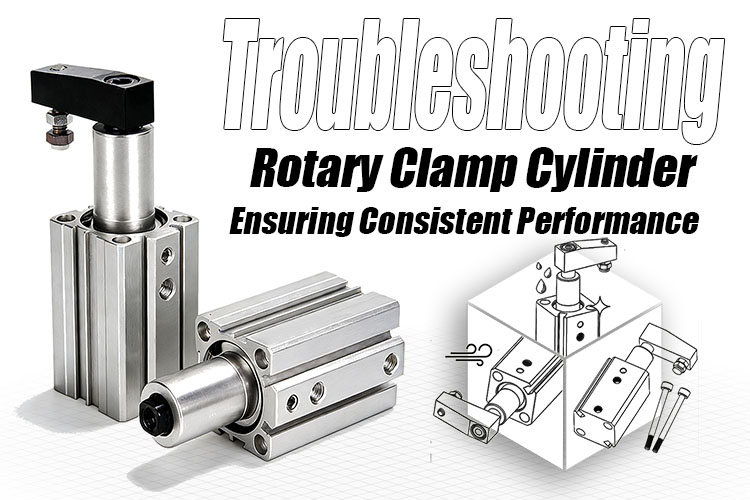
In the article “How Does the Rotary Clamp Cylinder Work?”, we provided a basic introduction to several key aspects of rotary clamp cylinders. However, during actual use, some users have found that rotary clamp cylinders do not always seem as reliable as expected—they may loosen, fail to achieve sufficient clamping force, or rotate unevenly.
Why does this happen?
In many cases, these issues are caused by incorrect installation, unsuitable operating environments, or improper maintenance. Based on practical experience and the Airtac application manual, the Fescolo team will explain how to use rotary clamp cylinders correctly and efficiently.
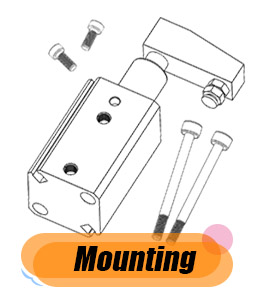
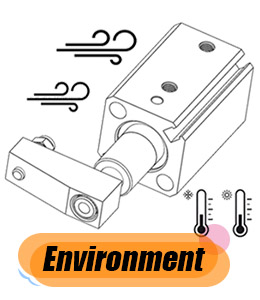
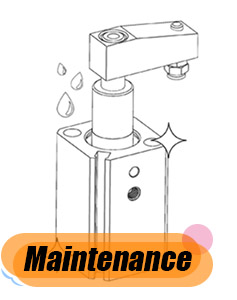
(Click on the image to jump to the corresponding section in the article)
1. Incorrect installation is one of the primary causes of rotary clamp cylinder failure.
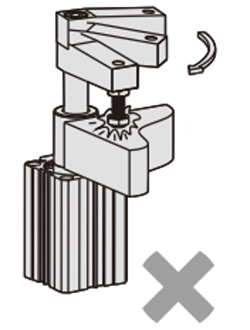 Rotation and clamping are two independent stages of motion. Under no circumstances should the clamp arm contact or grip the workpiece while the piston rod is rotating. Sufficient unobstructed space must be reserved for the entire rotation stroke, ensuring that the clamp arm can rotate freely into position without interference from the workpiece, fixtures, or surrounding equipment.
Therefore, dimensional calculations and layout verification are strongly recommended before installation to ensure proper positioning.
2. Horizontal installation is strictly prohibited.
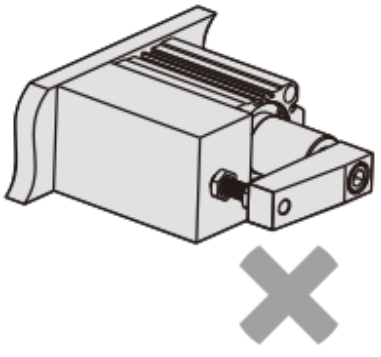 When a rotary clamp cylinder is installed horizontally and used to clamp a workpiece, the clamping force can only resist the workpiece’s weight through friction, which leads to unstable clamping. In addition, this configuration subjects the cylinder to radial loads, significantly shortening its service life.
The correct installation method is vertical mounting, so that the clamping load acts entirely along the cylinder’s axial direction.
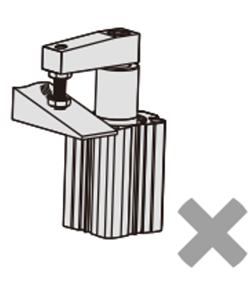
3. Do not clamp on inclined surfaces.
Clamping on an inclined surface disperses the effective clamping force and introduces eccentric loads on the cylinder. This not only causes unstable clamping but also accelerates wear and reduces the cylinder’s lifespan.
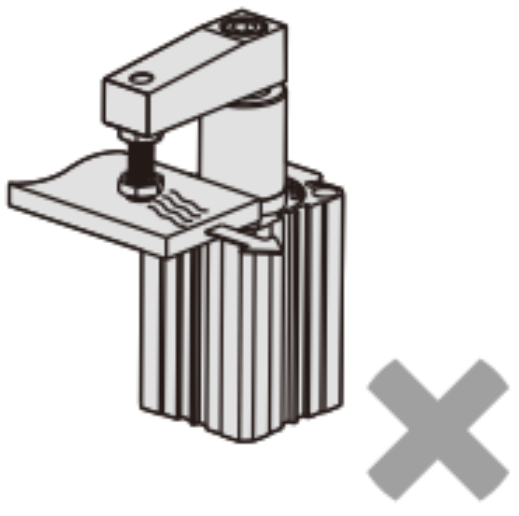
4. Do not move the workpiece after clamping.
Once the workpiece is clamped, it must remain stationary. Do not attempt to reposition it by force. If adjustment is required, first switch the cylinder state to release the clamping force, then reposition the workpiece.
1. An often-overlooked question: have you installed an air source treatment unit?
Air source treatment unit is also named as air preparation unit or F.R.L. It protects the entire downstream pneumatic system. It effectively reduces the ingress of dust and moisture into the cylinder, provides stable air pressure, and ensures continuous lubrication—all of which are critical for smooth and reliable cylinder operation.
From a long-term perspective, an air preparation unit is an essential component of any pneumatic system.
2. Use flow control to reduce impact and extend service life.
In QCK rotary clamp cylinders, the rotary motion is achieved through the interaction between a guide pin and a slot on the piston rod, which drives the rod to rotate. During extension and retraction, significant impact forces are generated between the pin and the slot.
To protect both the cylinder and associated components, we recommend installing flow control valves at the air ports. This allows precise control of clamping speed while effectively extending the cylinder’s service life.
3. Environmental temperature considerations.
◆ For high-temperature applications, use cylinders specifically designed for high temperatures or replace standard seals with FKM (Viton) seals.
◆ For low-temperature environments, pay close attention to moisture condensation, which can damage the cylinder if not properly managed.
1. Long-term storage precautions.
If the cylinder will not be used for an extended period:
◆ Apply anti-rust protection to external surfaces
◆ Seal air inlet and exhaust ports with original dust plugs
◆ Apply lubricating oil to the piston rod
Store the cylinder in a cool, dry, and well-ventilated environment
2. Regular cleaning in machining applications.
When used for workpiece clamping during machining, regularly remove chips, welding slag, and debris from the piston rod and wiper area. This prevents surface damage and ensures smooth, reliable operation.
Fokca(Fescolo)is a pneumatic cylinder supplier. As a leading Chinese supplier in this field, we specialize in providing high-quality, precision-engineered cylinders designed for a variety of applications.
Our products are widely used in robotics, automation, and other industries where compact and efficient solutions are essential. We offers a wide range of articles, videos and other resources on cylinders to help you better understand their working principles. You can visit more articles.
(FK9009)
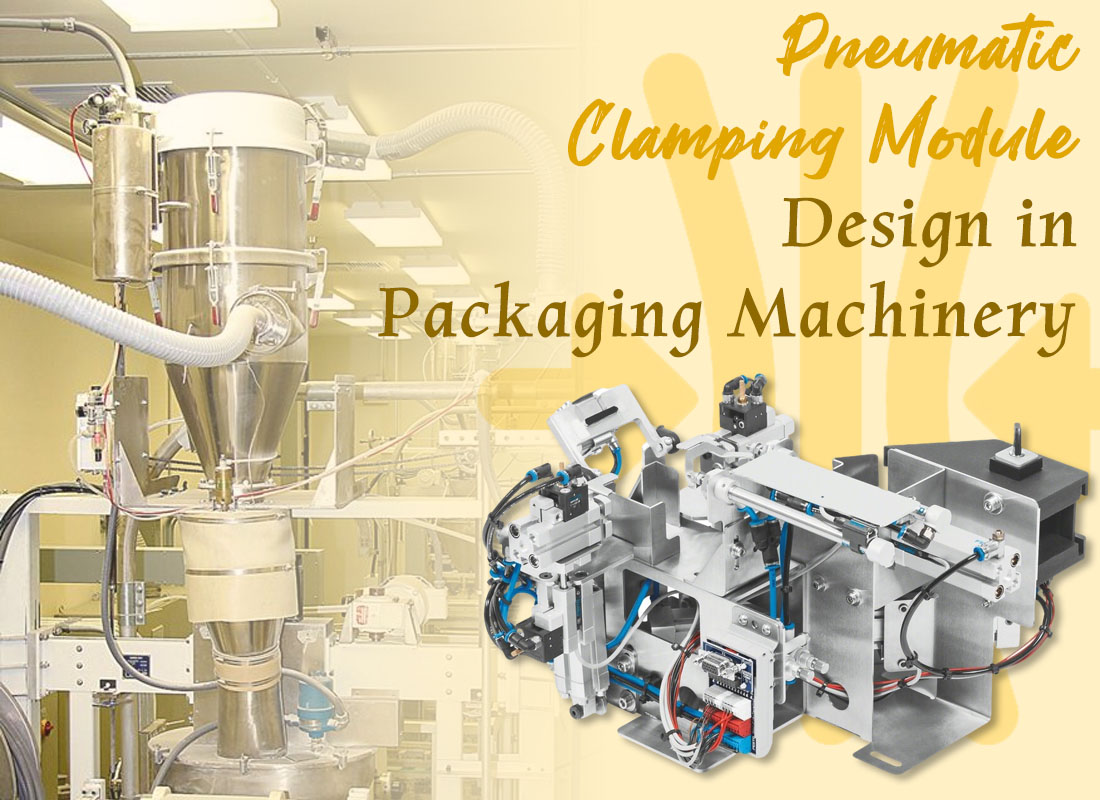 Pneumatic Clamping Module Design in Packaging Machinery
 Pneumatic Fittings Replacement Cycle: How Often Should You Change Pneumatic Fittings
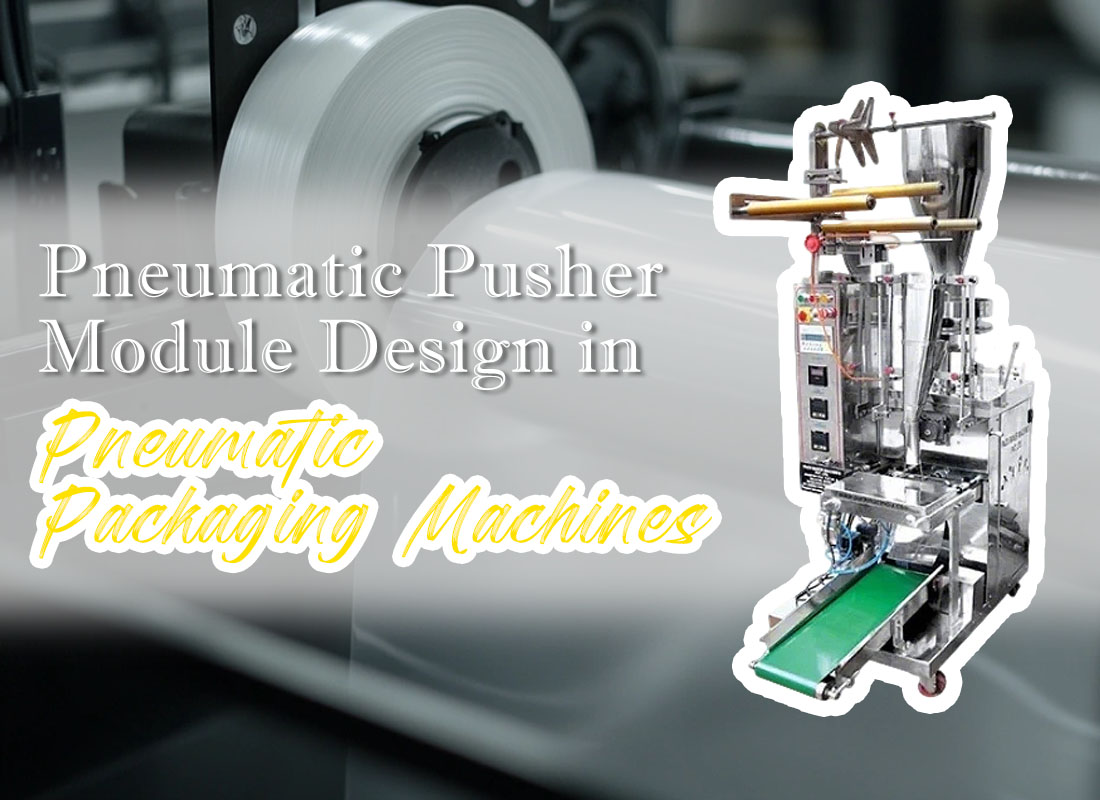 Pneumatic Pusher Module Design in Pneumatic Packaging Machines
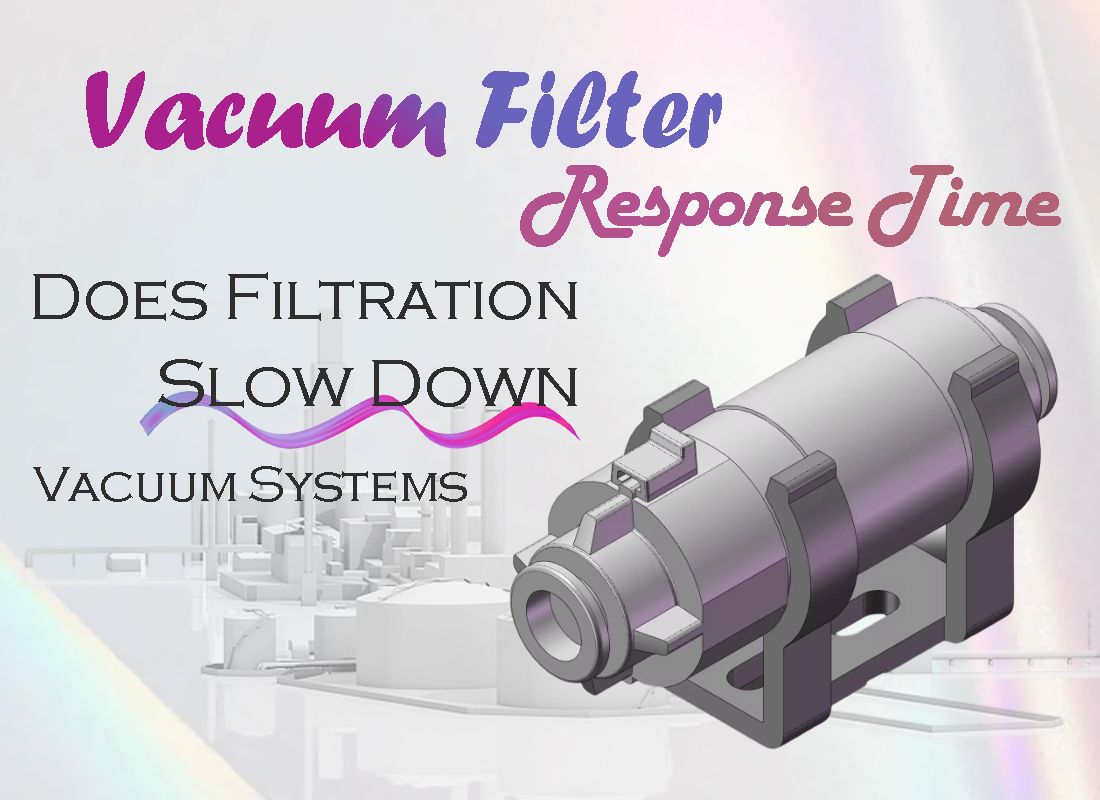 Vacuum Filter and Response Time: Does Filtration Slow Down Vacuum Systems
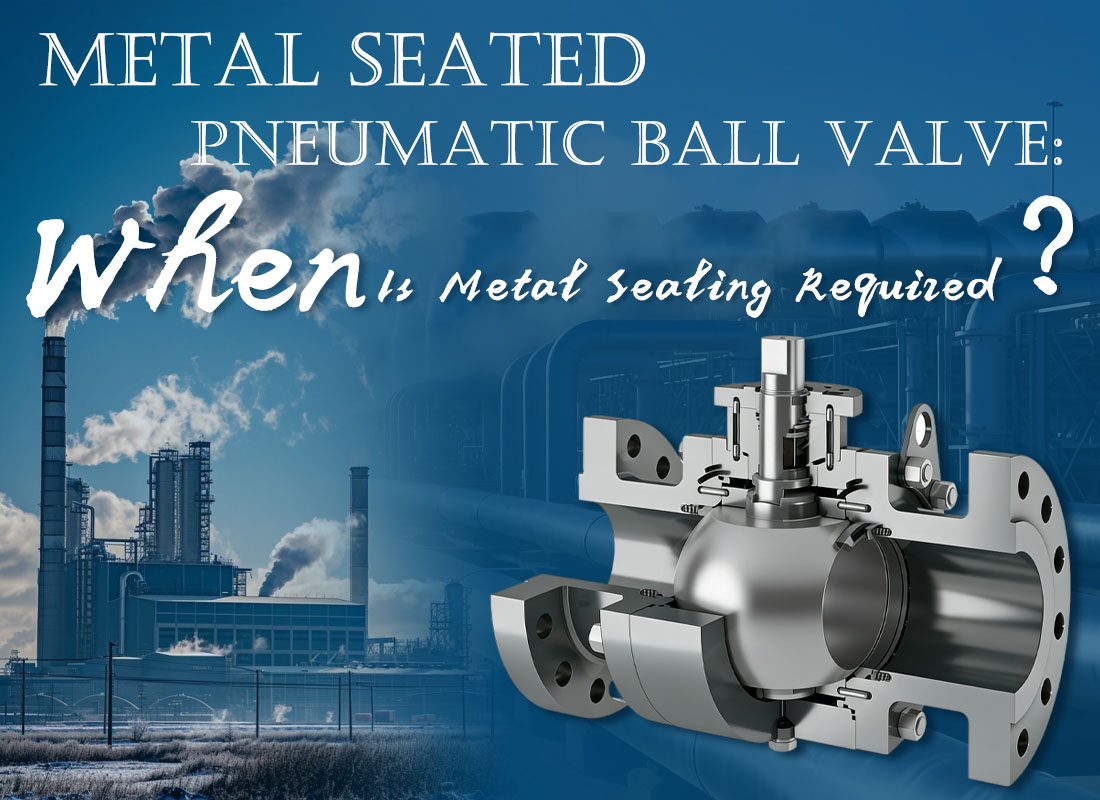 Metal Seated Pneumatic Ball Valve: When Is Metal Sealing Required?

Whatsapp QR:

WeChat QR:

Tell us about your application requirements. Our engineers will review your project and provide practical feedback within 1–2 working days.

Fescolo is the specialized custom pneumatic cylinder brand operated by Ningbo Fokca Automation Co., Ltd.
Looking for standard pneumatic and automation components?
Visit Fokca
© 2026 Ningbo Fokca Automation Co., Ltd. All Rights Reserved. Sitemap