Jan 22, 2026
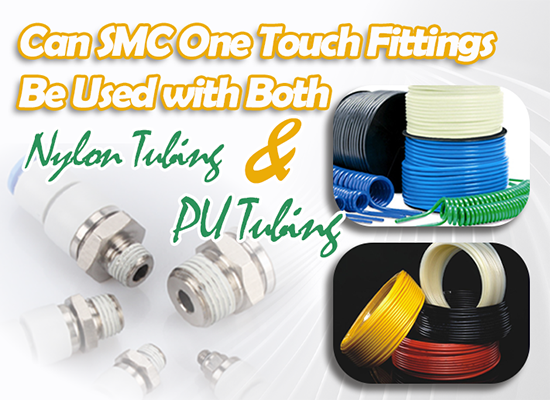
In pneumatic systems, SMC One Touch Fittings are often treated as a universal solution—push the tube in, lock it, and the connection is done. In real installations, however, questions arise when nylon tubing and PU tubing are used in the same system. Will the sealing performance remain stable? Does the fitting “prefer” one material over the other? For distributors, engineers, and buyers, the answer lies not in brand compatibility, but in material behavior.
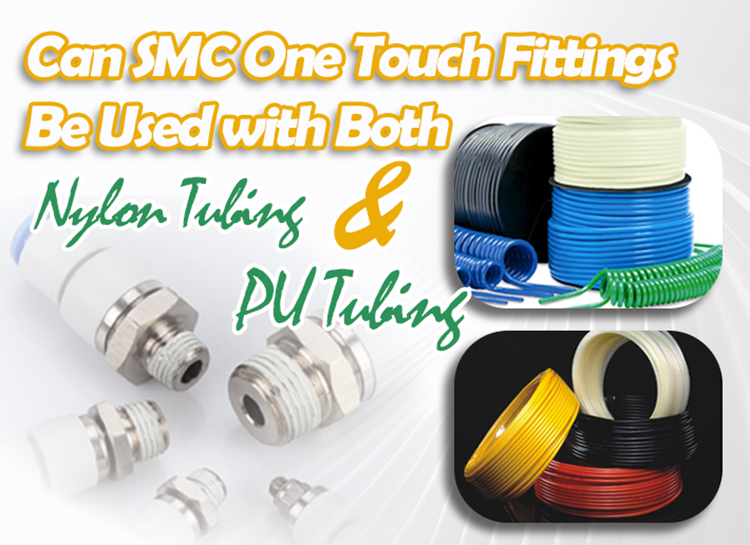
SMC pneumatic fittings are manufactured to precise dimensional tolerances, but the sealing mechanism depends heavily on how the tubing reacts under compression. Inside the fitting, a stainless steel collet grips the tube while an elastomer seal compresses against its outer diameter. This means tubing hardness, elasticity, and shape recovery directly affect long-term sealing performance in pneumatic fittings.
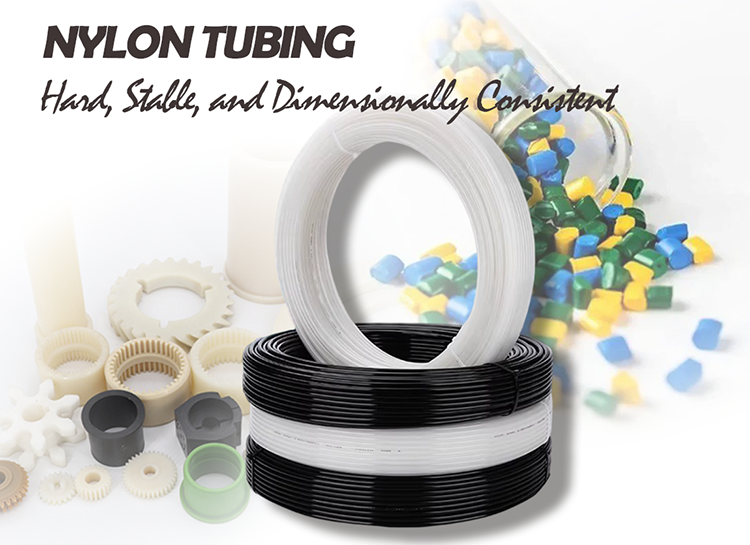
Nylon tubing is known for its higher Shore hardness and strong shape memory. When inserted into SMC One Touch fittings, nylon resists deformation and maintains a consistent outer diameter even under repeated pressure cycles. This makes it particularly suitable for:
1.Higher-pressure pneumatic circuits
2.Fixed or semi-fixed routing
3.Long-term installations with minimal movement
Because nylon deforms less under the seal, the contact surface remains stable, resulting in excellent air tightness and low leakage risk over time.
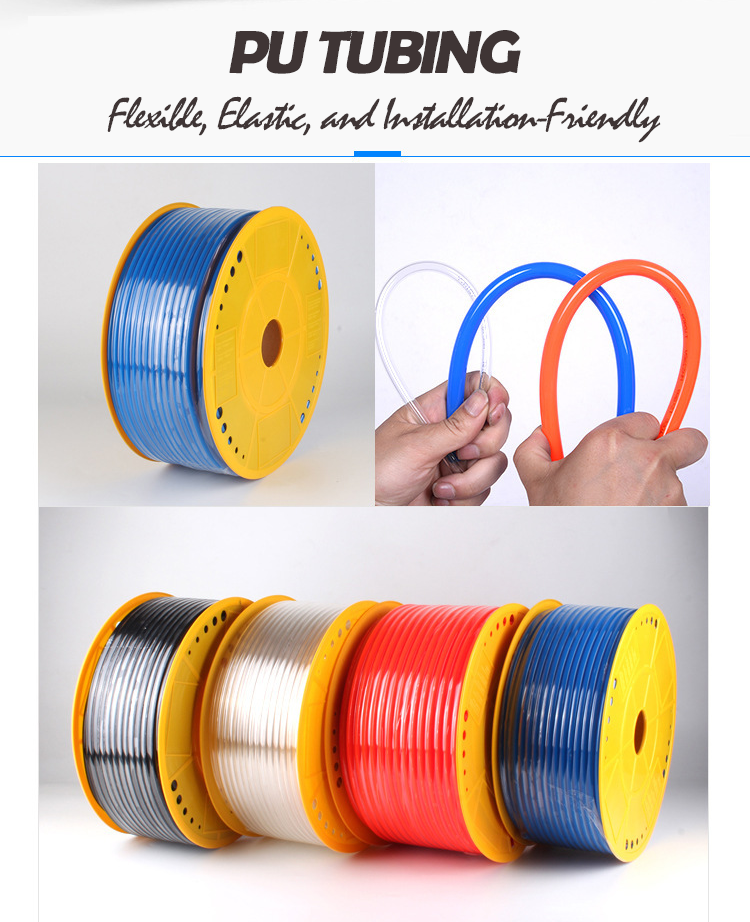
PU tubing behaves very differently. Its softer structure provides high elasticity and excellent rebound, making it ideal for tight bending radii, moving parts, and compact equipment layouts. In pneumatic air tubing applications, PU is often chosen for ease of installation and vibration absorption.
However, that same softness means PU can temporarily deform under the sealing pressure inside pneumatic fittings. While SMC fittings are designed to accommodate this, the seal relies more on material rebound. Over time—especially under heat, oil mist, or frequent movement—PU may show slight relaxation, which can influence sealing stability in demanding environments.
From a functional standpoint, SMC One Touch Fittings are compatible with both nylon tubing and PU tubing, provided the tube outer diameter and tolerance meet SMC specifications. The difference lies not in whether they seal, but how they seal over time.
| Property | Nylon Tubing | PU Tubing |
|---|---|---|
| Hardness | High | Medium–Low |
| Elastic rebound | Moderate | Excellent |
| Deformation under seal | Minimal | Noticeable but recoverable |
| Long-term dimensional stability | Very high | Medium |
| Best use case | Static, high-pressure lines | Dynamic, flexible routing |
In short-term or moderate-duty applications, both materials perform reliably. In long-term or mixed-material systems, performance differences become more visible.
In many factories, nylon tubing is used for main air lines while PU tubing is added later for actuators or moving modules. Technically, this works—but issues arise when expectations are not adjusted:
◆PU tubing may require more careful insertion depth to ensure full seal engagement
◆Frequent reconnection can accelerate surface wear on softer PU
◆eat or chemical exposure may affect PU elasticity faster than nylon
These factors don’t make PU unsuitable; they simply require more deliberate selection and maintenance planning.
For mixed pneumatic systems using SMC One Touch fittings, a more stable approach is:
◆Use nylon tubing for main distribution lines and high-pressure zones
◆Use PU tubing for terminal connections, moving axes, and compact layouts
◆Keep tubing OD tolerance consistent across suppliers
◆Avoid mixing tubing materials on the same critical sealing point when possible
This strategy reduces variability while preserving flexibility where it’s actually needed.
For buyers and factory managers, compatibility is not just about “will it fit,” but how predictable the performance will be over years of operation. SMC pneumatic fittings are engineered to work with both materials, but understanding tubing behavior helps prevent unnecessary downtime, rework, or air leakage complaints.
Suppliers that can provide stable-dimension PU tubing and precision-controlled nylon tubing make a measurable difference in real-world installations.
In pneumatic systems, fittings connect components—but materials determine reliability. Understanding how nylon and PU behave inside the same fitting is the difference between “it works” and “it keeps working.”
(FK9026)
 Pneumatic Clamping Module Design in Packaging Machinery
 Pneumatic Fittings Replacement Cycle: How Often Should You Change Pneumatic Fittings
 Pneumatic Pusher Module Design in Pneumatic Packaging Machines
 Vacuum Filter and Response Time: Does Filtration Slow Down Vacuum Systems
 Metal Seated Pneumatic Ball Valve: When Is Metal Sealing Required?

Jan 05, 2026 Cylinder Fundamentals
What is Plumbing and Pipe Fitting?




Whatsapp QR:

WeChat QR:

Tell us about your application requirements. Our engineers will review your project and provide practical feedback within 1–2 working days.

Fescolo is the specialized custom pneumatic cylinder brand operated by Ningbo Fokca Automation Co., Ltd.
Looking for standard pneumatic and automation components?
Visit Fokca
© 2026 Ningbo Fokca Automation Co., Ltd. All Rights Reserved. Sitemap