Feb 07, 2026
In modern automation lines, engineers often compare vacuum generator vs vacuum pump when selecting a gripping solution. Both create negative pressure, yet their behavior in real machines is very different. A vacuum pump can deliver large airflow, but it also brings size, noise, and maintenance work. A vacuum generator, driven by compressed air and the Venturi principle, offers a compact and modular alternative that matches the rhythm of automated equipment.
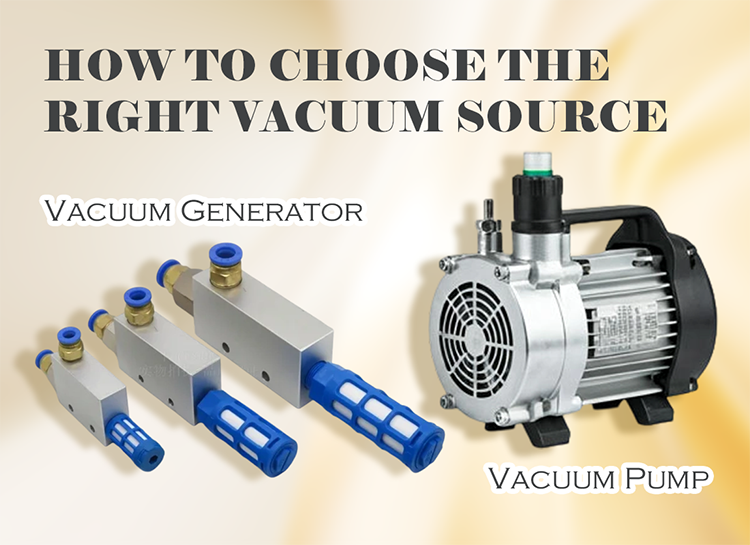
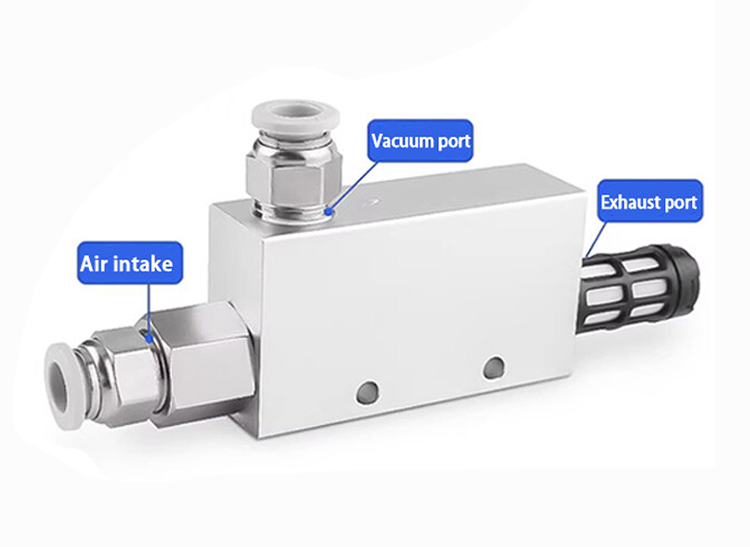
A vacuum pump creates negative pressure through a rotary or reciprocating mechanical structure and is powered by an electric motor. A vacuum generator (venturi ejector) uses compressed air and the Venturi principle to produce vacuum. Mixing these definitions leads to wrong expectations. In the discussion of vacuum generator vs vacuum pump, the driving source is the first factor that shapes energy use, maintenance, and layout design.
Consider a pick-and-place tool with eight Ø40 mm cups handling non-porous plastic sheets. The machine picks one part every 15 seconds and holds it for only 3 seconds.
◆Pump: runs all day, controlled by a vacuum valve → constant 0.25 hp
◆Generator: works only during lifting → average about 0.18 hp
In this scenario, vacuum generator vs vacuum pump clearly leans toward the generator because overall running cost becomes lower and response time is faster. Short tubing and on-tool installation also improve stability.
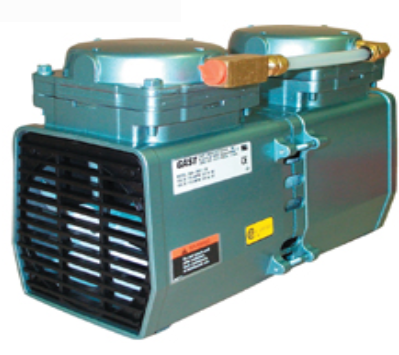
For CNC routing tables or fixtures where the workpiece must be held for minutes, vacuum is required continuously. The generator would consume compressed air all the time, while the pump operates at a steady and lower power level. Here the pump is the reasonable solution in the vacuum generator vs vacuum pump comparison.
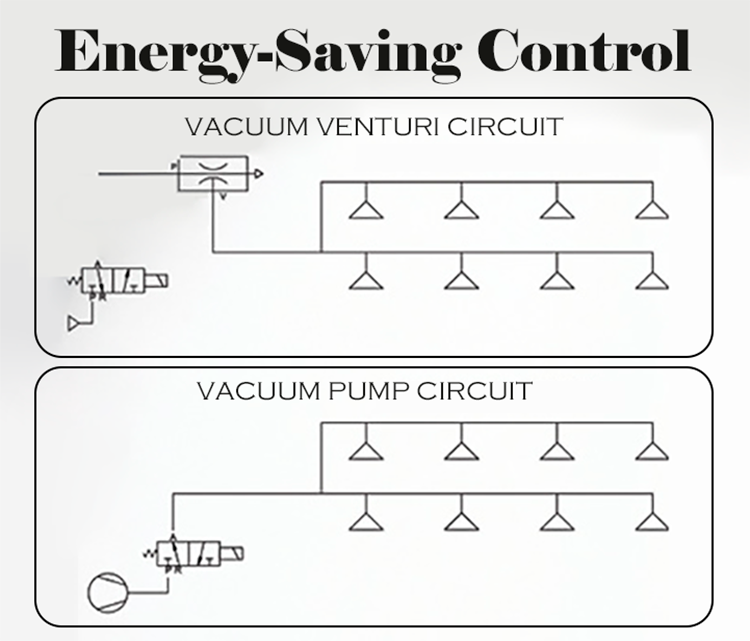
Modern generators can be equipped with an energy-saving circuit. The unit shuts off when the preset vacuum level is reached and restarts only when pressure drops. This works well on non-porous products such as metal or plastic. With porous materials like cardboard or MDF, leakage is high and the benefit becomes limited.
Practical Comparison
| Item | Vacuum Pump | Vacuum Generator |
|---|---|---|
| Initial cost | Higher | Lower |
| Size & weight | Large | Compact |
| Heat generation | Noticeable | Almost none |
| Maintenance | Regular service | Virtually maintenance-free |
| Best for | Continuous vacuum | Intermittent cycles |
Large pumps can weigh hundreds of pounds and need electrical wiring, filters, and long hoses. A vacuum generator can be mounted directly on the end-of-arm tooling and connected with a small compressed-air line. For robot systems using automatic tool changers, this simplicity often outweighs theoretical efficiency advantages of pumps.
To evaluate vacuum generator vs vacuum pump, engineers and purchasers should check:
◆Cycle time and actual suction duration
◆Porosity of the product
◆Availability and cost of compressed air
◆Space on the machine
◆Maintenance capability
For integrators looking to upgrade existing equipment, selecting the right vacuum source can reduce energy cost and simplify maintenance while keeping the machine layout clean and flexible.
(FK9026)
 Pneumatic Clamping Module Design in Packaging Machinery
 Pneumatic Fittings Replacement Cycle: How Often Should You Change Pneumatic Fittings
 Pneumatic Pusher Module Design in Pneumatic Packaging Machines
 Vacuum Filter and Response Time: Does Filtration Slow Down Vacuum Systems
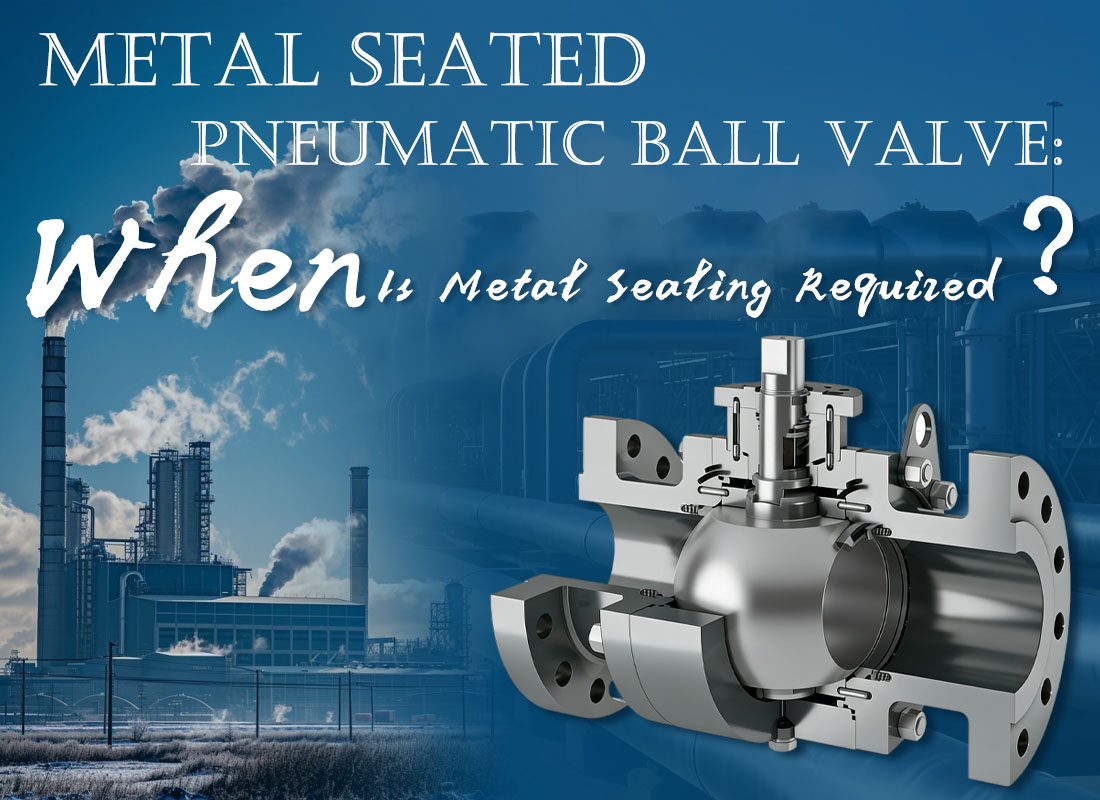 Metal Seated Pneumatic Ball Valve: When Is Metal Sealing Required?

Whatsapp QR:

WeChat QR:

Tell us about your application requirements. Our engineers will review your project and provide practical feedback within 1–2 working days.

Fescolo is the specialized custom pneumatic cylinder brand operated by Ningbo Fokca Automation Co., Ltd.
Looking for standard pneumatic and automation components?
Visit Fokca
© 2026 Ningbo Fokca Automation Co., Ltd. All Rights Reserved. Sitemap