Jan 29, 2026
In vacuum applications, proper valve selection is critical to maintaining system integrity. Hand Valve performance in negative pressure or low-pressure environments differs significantly from standard compressed air systems. Engineers and procurement specialists evaluating hand valve vacuum applications must understand potential leakage risks, sealing limitations, and design improvements that ensure reliable operation under partial or full vacuum conditions.
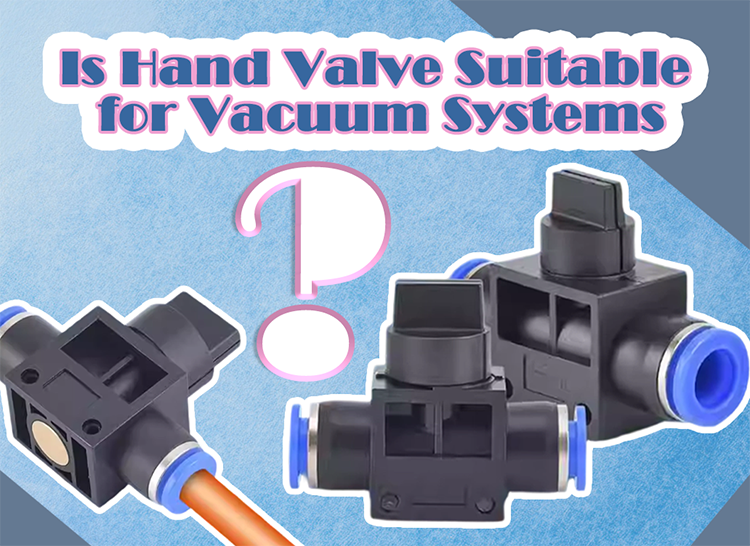
Standard Hand Valve designs rely on elastomer seals or O-rings to prevent fluid or gas leakage. Under vacuum conditions, these seals can deform or lose contact with the valve seat, resulting in slow leaks that compromise system efficiency. Understanding seal compression and material compatibility is key when using hand valves in low-pressure applications.
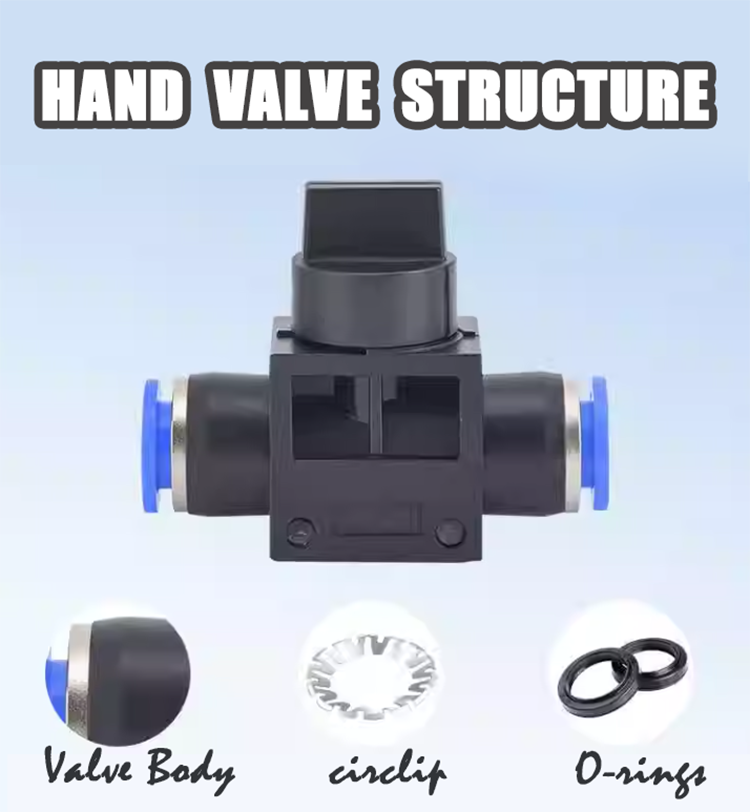
Vacuum systems exert reverse pressure on the valve body. Straight-through hand valves may allow minor air ingress at threaded joints or push-fit connections. Angle-type valves or valves with reinforced seats often perform better in vacuum systems, as their design reduces the number of exposed sealing surfaces and improves mechanical stability.
While standard hand valves may not be suitable for deep vacuum, they can be effective in light vacuum or negative pressure lines where leak rates of a few milliliters per minute are acceptable. Hand valves provide a cost-effective solution for lab vacuum setups, mild vacuum conveyors, or pneumatic return lines, provided that material selection and assembly quality are carefully controlled.
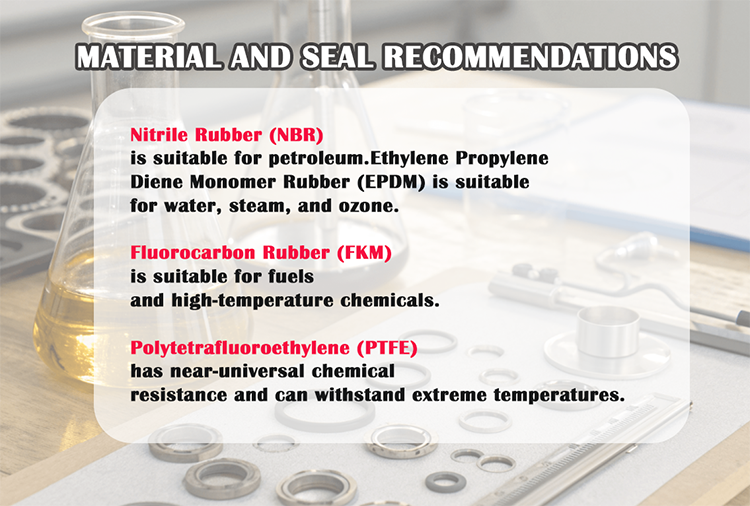
For vacuum applications, stainless steel or brass Hand Valve bodies are preferred due to their low outgassing and dimensional stability. Elastomer seals should be chosen based on vacuum compatibility; FKM and silicone O-rings maintain elasticity under low pressure better than standard NBR seals. Table 1 summarizes typical suitability:
| Component | Standard Air Use | Vacuum Use |
|---|---|---|
| Valve Body | Brass / Stainless | Stainless preferred |
| Seals | NBR | FKM / Silicone |
| Connection Type | Threaded / Push-to-Connect | Reinforced seats recommended |
| Leak Risk | Low | Moderate to High if not reinforced |
Data based on industry vacuum performance tests.
When integrating hand valve vacuum solutions, attention to orientation, mounting torque, and tubing support is critical. Excessive bending or uneven mounting may compromise the seal under negative pressure. Proper installation minimizes leakage risk and extends valve service life, particularly in continuous vacuum systems.
When evaluating Hand Valve options for vacuum use, consider:
1.The level of vacuum required
2.Valve body material and seal compatibility
3.Number of connection points and mechanical reinforcement
Angle-type valves, reinforced seats, and vacuum-rated O-rings can significantly reduce leakage risk, making these solutions suitable for light vacuum applications while maintaining ease of manual operation.
In summary, Hand Valve can be suitable for light vacuum or negative pressure systems, provided that the design accounts for seal behavior, material selection, and structural reinforcement. Early evaluation of these factors ensures reliability, reduces maintenance, and optimizes system performance for engineers, distributors, and end users alike.
(FK9026)
 Pneumatic Clamping Module Design in Packaging Machinery
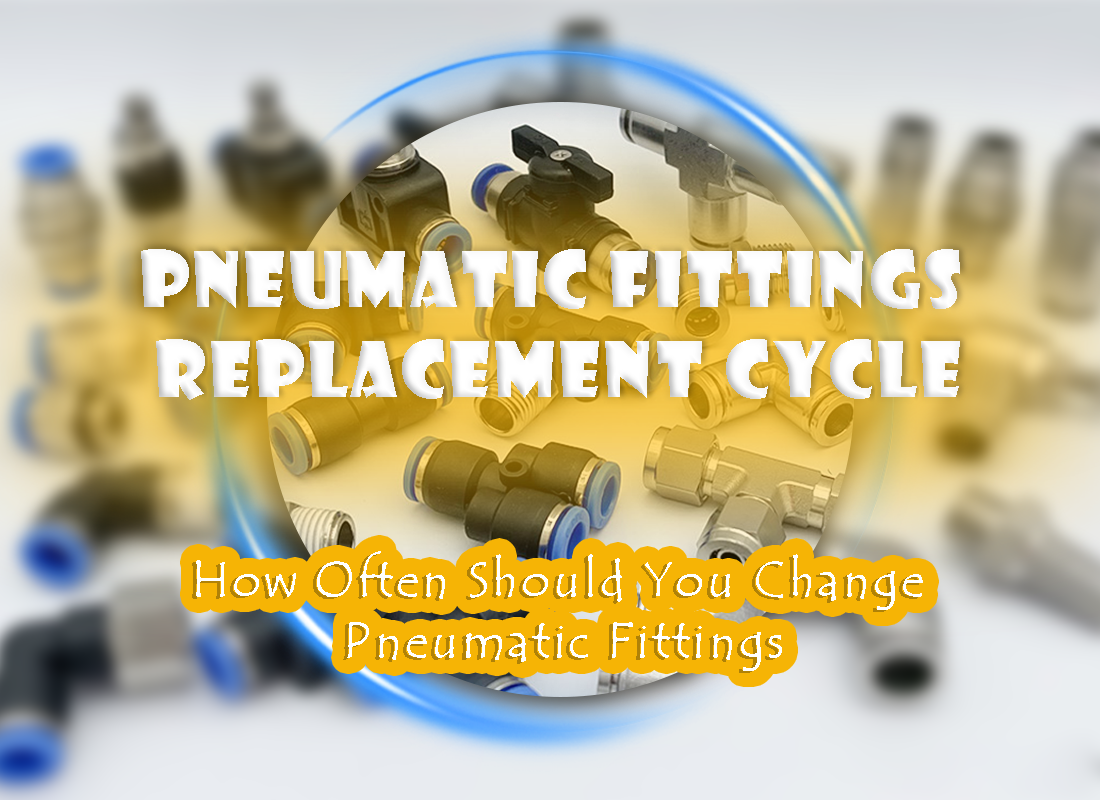 Pneumatic Fittings Replacement Cycle: How Often Should You Change Pneumatic Fittings
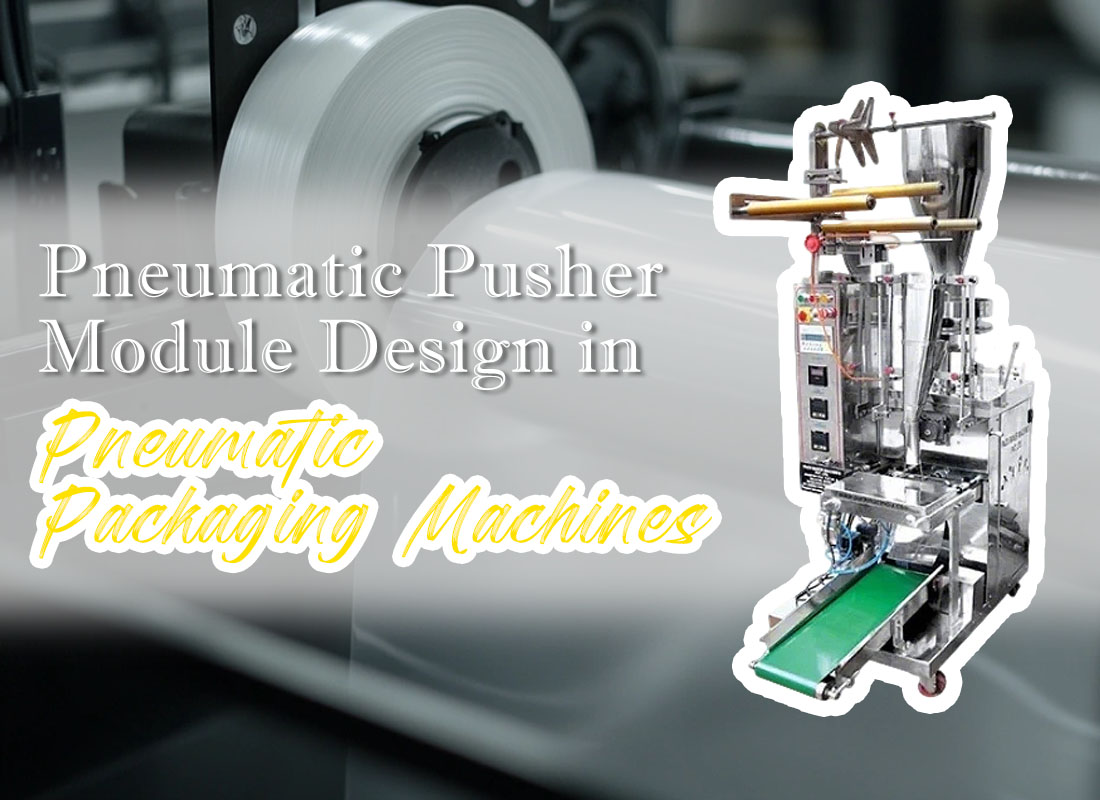 Pneumatic Pusher Module Design in Pneumatic Packaging Machines
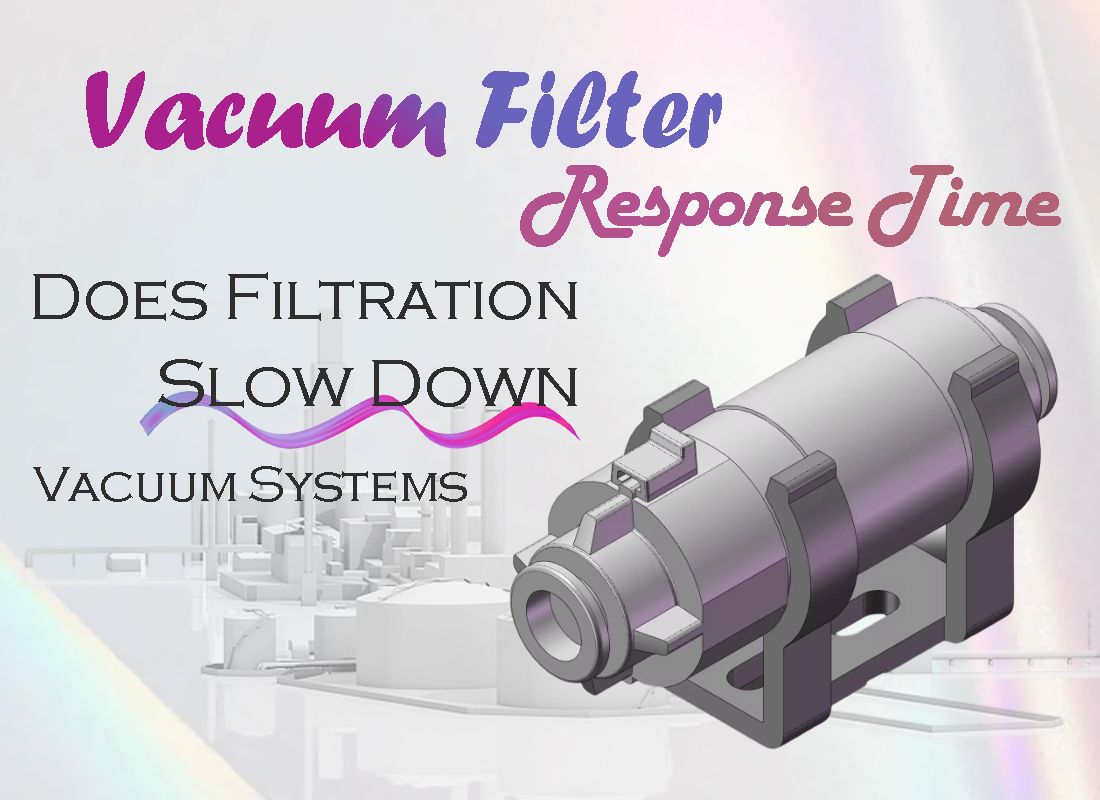 Vacuum Filter and Response Time: Does Filtration Slow Down Vacuum Systems
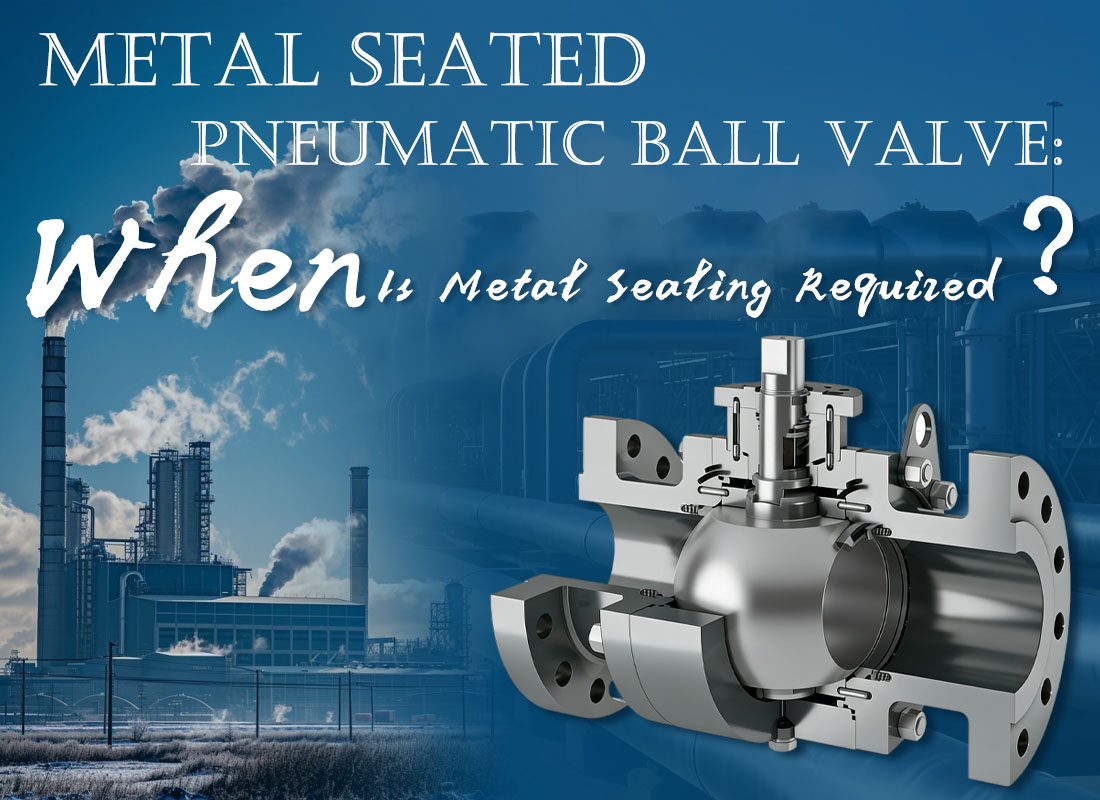 Metal Seated Pneumatic Ball Valve: When Is Metal Sealing Required?

Whatsapp QR:

WeChat QR:

Tell us about your application requirements. Our engineers will review your project and provide practical feedback within 1–2 working days.

Fescolo is the specialized custom pneumatic cylinder brand operated by Ningbo Fokca Automation Co., Ltd.
Looking for standard pneumatic and automation components?
Visit Fokca
© 2026 Ningbo Fokca Automation Co., Ltd. All Rights Reserved. Sitemap