Jan 06, 2026
Hydraulic systems are an essential part of modern machinery, and their performance and safety largely depend on the proper design of the piping system. Correctly selecting hydraulic hoses and fittings ensures efficient system operation, extends service life, and reduces maintenance costs.
If hoses and fittings are not properly selected, the following issues may occur:
Pressure drop: If the hose diameter is too small or the routing is improper, system pressure may be insufficient, reducing the responsiveness of actuators.
Leakage: Mismatched fittings or inadequate pressure rating can lead to leaks, compromising system safety.
Reduced service life: Long-term operation under overpressure or high temperatures can accelerate hose aging, cracking, or bursting.
Reduced system efficiency: Pressure loss and insufficient flow can lead to energy waste and increased operational costs.
Therefore, properly sizing hydraulic hoses and fittings is fundamental to ensuring a safe, reliable, and efficient hydraulic system.
Before selecting hoses and fittings, it is essential to understand the basic operating parameters of the hydraulic system, including:
System Operating Pressure
Normal and maximum pressure: Identify the system’s continuous operating pressure and peak pressure to ensure that hoses and fittings have adequate pressure ratings.
It is recommended to include a safety factor of 1.25–1.5 in the design.
Flow Rate Requirements
Flow rate (L/min or GPM) determines the hose diameter. Too small a diameter increases pressure loss, while too large increases cost.
Flow rate and hose length should be evaluated together for optimal sizing.
Hydraulic Fluid Temperature Range
High or low temperature environments affect hose material performance.
Ensure hoses are rated for the required temperature range and can accommodate thermal expansion of the fluid.
Hydraulic Fluid Type and Material Compatibility
Different fluids (mineral oil, synthetic oil, water-glycol, etc.) have varying effects on rubber or plastic hoses.
Select materials compatible with the hydraulic fluid to prevent swelling or softening of the hose.
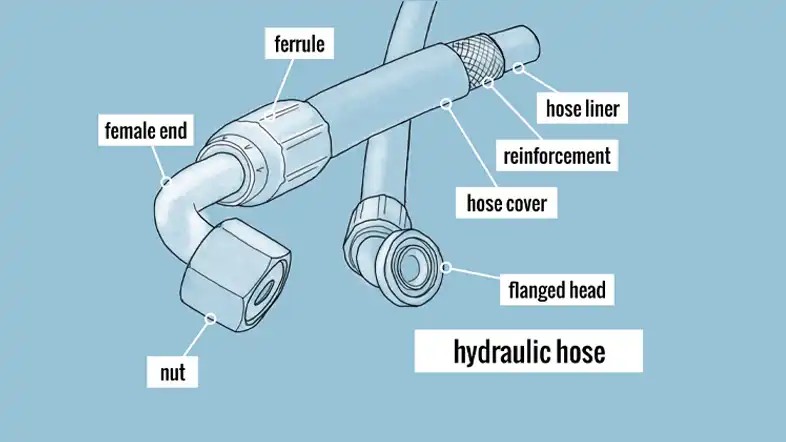
Hose inner diameter directly affects flow rate, pressure loss, and system efficiency. When selecting the diameter, consider:
Flow Rate Impact on Hose Size
Higher flow rates require larger diameters to reduce flow velocity and pressure loss.
Too small a diameter reduces system efficiency, while too large increases cost and bending radius requirements.
Minimizing Pressure Loss
Long hoses or frequent bends increase pressure loss. Optimize routing or increase diameter when necessary.
Using Manufacturer Flow Charts or Formulas
Most manufacturers provide pressure-flow reference charts to help select the correct diameter.
Pressure loss formula:
Where ΔP = pressure loss, L = hose length, μ = fluid viscosity, Q = flow rate, r = inner radius of the hose.
Considering Hose Length and Bend Angles
Larger bend angles increase flow resistance; avoid sharp bends and increase diameter if necessary.
Ensure the routing respects the hose’s minimum bend radius.
When choosing a hose, consider pressure, temperature, fluid type, and environmental conditions:
Material Selection
Common materials: synthetic rubber, thermoplastics, PTFE (Teflon)
Different materials suit different fluids and temperature ranges.
Reinforcement and Pressure Rating
Single or multi-layer steel wire reinforcement increases pressure capacity.
Ensure hose pressure rating ≥ system maximum pressure.
Temperature and Environmental Suitability
Outdoor or high-temperature applications require UV resistance and heat aging resistance.
Also consider wear resistance, oil resistance, and chemical resistance.
Fittings are critical components of a hose system. Key considerations:
Fitting Type and Hose Compatibility
Ensure the fitting size and material fully match the hose.
Thread Type and Sealing Method
Common types: O-ring seal, flare, NPT, JIC, BSP, etc.
The sealing method must be reliable to prevent leakage.
Fitting Pressure Rating
Fitting pressure rating must ≥ system maximum operating pressure to ensure long-term safe operation.
Pressure Safety Factor
Hoses and fittings should have a pressure rating 25–50% higher than the system’s maximum pressure for reliability.
Minimum Bend Radius
Each hose has a minimum bend radius; exceeding it can cause kinking or damage.
Routing Guidelines
Avoid abrasion, vibration, and over-tight fastening.
Allow for thermal expansion so hoses can flex with temperature changes.
Ensure the system is leak-free and meets pressure requirements.
Check for Leaks and Performance Under Load
Recheck hoses and fittings after running the system for a period.
Regular Inspection and Maintenance
Clean hose surfaces and inspect for cracks, aging, or oil leaks.
Hose Oversized or Undersized
Too small: high pressure loss
Too large: increased cost, larger bending radius required
Ignoring Minimum Bend Radius and Flexibility
Can lead to hose kinking or premature aging
Using Incompatible Fittings or Materials
May cause leaks, insufficient pressure rating, or chemical corrosion
(FK9016)
 Pneumatic Clamping Module Design in Packaging Machinery
 Pneumatic Fittings Replacement Cycle: How Often Should You Change Pneumatic Fittings
 Pneumatic Pusher Module Design in Pneumatic Packaging Machines
 Vacuum Filter and Response Time: Does Filtration Slow Down Vacuum Systems
 Metal Seated Pneumatic Ball Valve: When Is Metal Sealing Required?

Whatsapp QR:

WeChat QR:

Tell us about your application requirements. Our engineers will review your project and provide practical feedback within 1–2 working days.

Fescolo is the specialized custom pneumatic cylinder brand operated by Ningbo Fokca Automation Co., Ltd.
Looking for standard pneumatic and automation components?
Visit Fokca
© 2026 Ningbo Fokca Automation Co., Ltd. All Rights Reserved. Sitemap