Feb 12, 2026
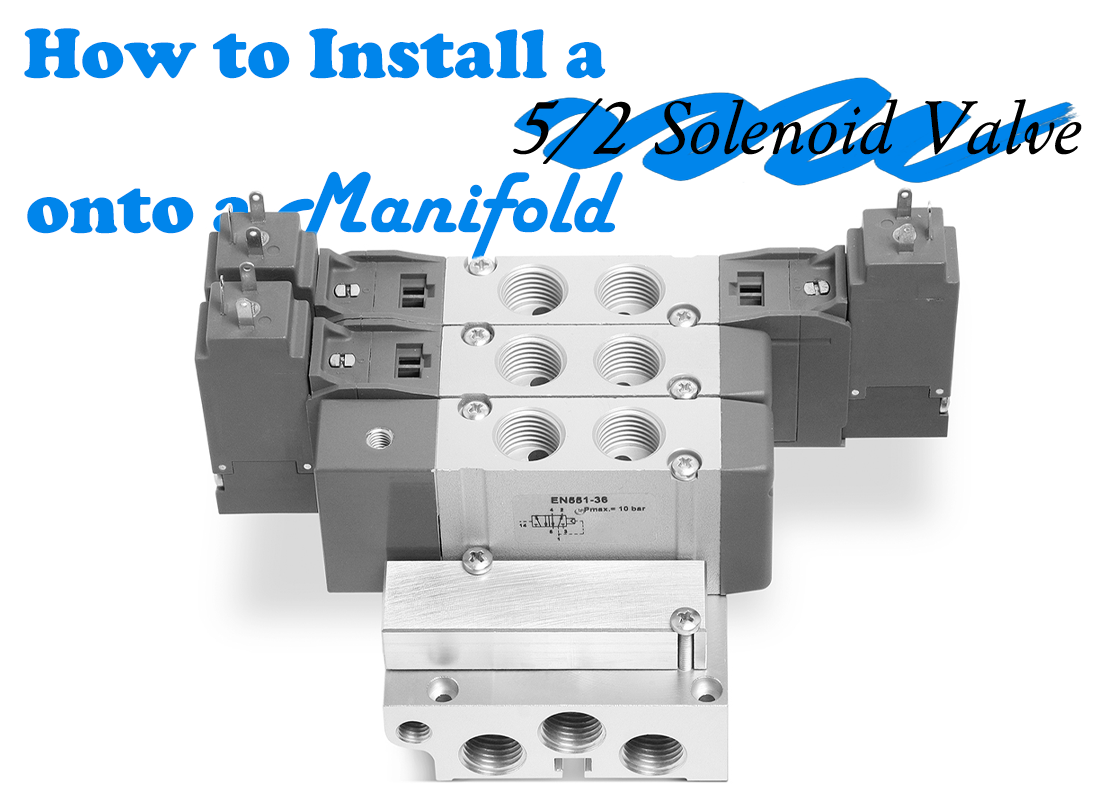
Mounting a 5/2 solenoid valve with manifold is the most efficient way to build a pneumatic control system. The manifold integrates air supply and exhaust for multiple valves, reducing tubing complexity and improving reliability. When many valves are used, individual piping becomes confusing and increases the risk of leakage. A manifold block provides a clean and professional solution.

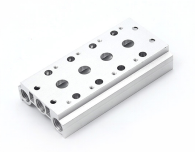
The common manifold for a two position five port valve has a three-row hole layout:
◆ The center large hole corresponds to the P supply port of the valve;
◆ The two side holes correspond to R and S exhaust ports;
◆ Internal channels connect to A/B working ports.
During installation of a pneumatic 5/2 solenoid valve, the bottom ports of the valve must be aligned precisely with the manifold holes. Long screws pass through the valve body to fix it on the block. A gasket or O-ring is essential between the valve and the manifold surface to prevent air leakage—this is a key point in any 5/2 valve installation guide.
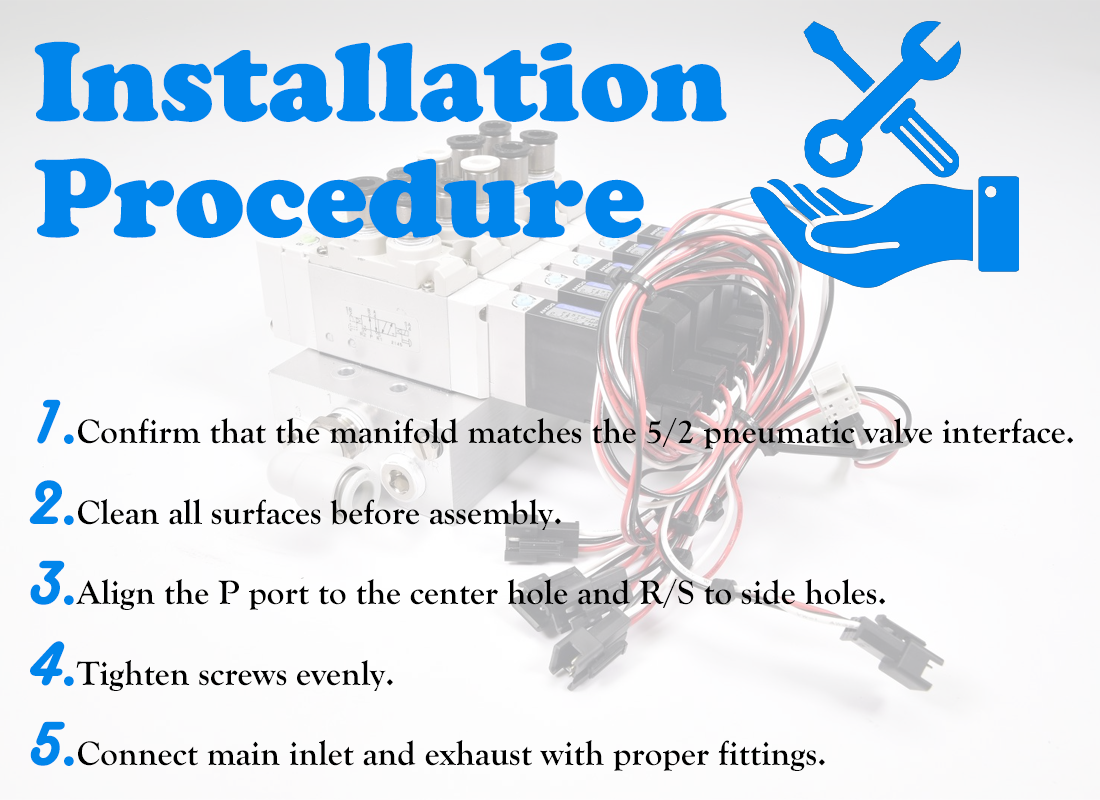
① Confirm that the manifold matches the 5/2 pneumatic valve interface;
② Clean all surfaces before assembly;
③ Align the P port to the center hole and R/S to side holes;
④ Tighten screws evenly;
⑤ Connect main inlet and exhaust with proper fittings.
The inlet and exhaust size of the manifold must be the same as the valve. If the diameter is smaller, back pressure will increase and affect the performance of a fast response 5/2 solenoid valve. Correct sizing is part of the general 5/2 solenoid valve sizing chart principle.
| Item | Requirement | Purpose |
|---|---|---|
| Port alignment | P to center hole, R/S to side holes | Ensure correct airflow |
| Sealing element | Gasket or O-ring | Leak prevention |
| Screw type | Long fixing screw | Stable mounting |
| Inlet size | Same as valve P port | Avoid pressure loss |
| Exhaust size | Same as valve R/S | Fast response |
In industrial automation, many engineers assemble the 5/2 solenoid valve manifold block first and then mount the whole unit into the cabinet. After air supply is connected, each station can be tested using the manual override button. Leakage is usually caused by damaged gaskets or misalignment.
This method applies to direct acting 5/2 solenoid valve as well as pilot operated 5/2 valve types. Compared with using individual valves, the manifold approach offers clear advantages described in the topic of 5/2 solenoid valve manifold vs individual valves: cleaner layout, lower cost, and easier maintenance.
A properly installed 5/2 solenoid valve for pneumatic systems is widely used for air cylinder control, packaging equipment, conveyors and robot automation. With correct sealing and matching dimensions, the system achieves stable performance and long service life, meeting the requirements of modern 5/2 solenoid valve for industrial automation projects.
(FK9025)
 Pneumatic Clamping Module Design in Packaging Machinery
 Pneumatic Fittings Replacement Cycle: How Often Should You Change Pneumatic Fittings
 Pneumatic Pusher Module Design in Pneumatic Packaging Machines
 Vacuum Filter and Response Time: Does Filtration Slow Down Vacuum Systems
 Metal Seated Pneumatic Ball Valve: When Is Metal Sealing Required?

Whatsapp QR:

WeChat QR:

Tell us about your application requirements. Our engineers will review your project and provide practical feedback within 1–2 working days.

Fescolo is the specialized custom pneumatic cylinder brand operated by Ningbo Fokca Automation Co., Ltd.
Looking for standard pneumatic and automation components?
Visit Fokca
© 2026 Ningbo Fokca Automation Co., Ltd. All Rights Reserved. Sitemap