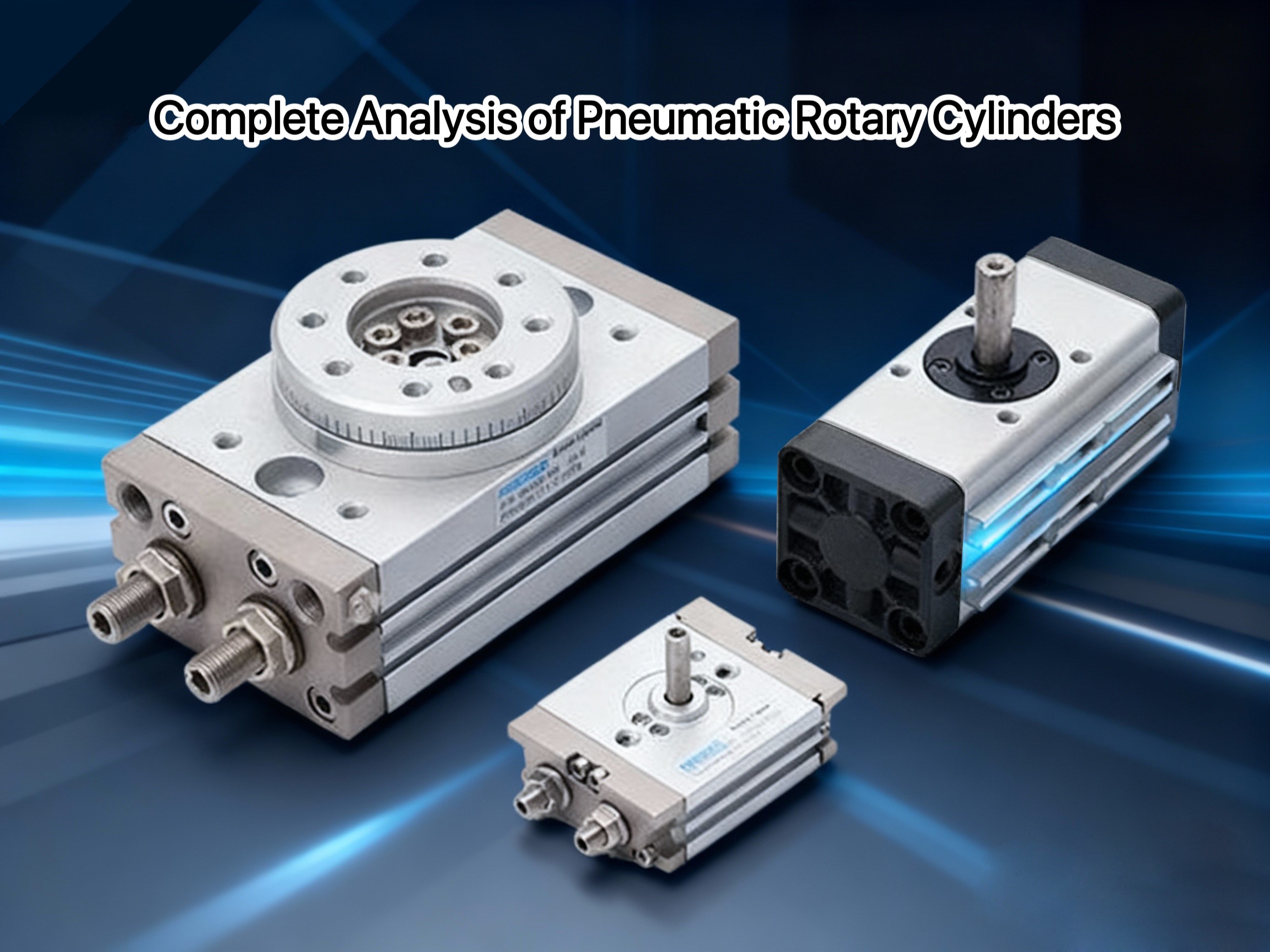
What ia a rodless air cylinder ?
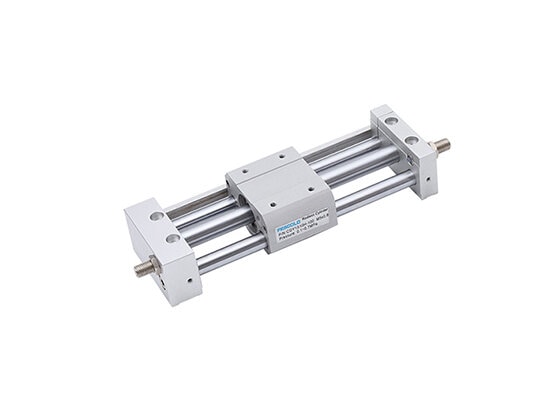
A rodless air pneumatic cylinder is a type of cylinder that lacks a traditional piston rod. It is driven by compressed air and converts the linear motion of an internal piston into the linear motion of an external load through a connection between the piston and the external slider, which can be magnetic or mechanical. Since the slider can move along the entire length of the cylinder body, its stroke can be much longer than that of a standard rod-type cylinder.
How does a rodless pneumatic cylinder work?What are the differences in operation between magnetic coupling and mechanical coupling?
Rodless pneumatic cylinder working principle
The working principle of a rodless pneumatic cylinder is based on the use of compressed air to drive a piston, which moves a carriage or platform along the length of the cylinder. Unlike traditional pneumatic cylinders, it does not have a piston rod. Here's a simplified overview of how it works:
Compressed Air Inlet:
Air is supplied through ports at one or both ends of the cylinder. The air is directed to one side of the piston.
Piston and Carriage Movement:
The piston inside the cylinder is sealed and connected to a sliding carriage. The piston moves due to the air pressure, and this motion is transferred to the carriage, which slides along the length of the cylinder body.
Direction of Movement:
When compressed air is applied to one side of the piston, it pushes the piston and the attached carriage in one direction. Air is vented from the opposite side of the piston.
For double-acting cylinders, the air supply alternates between both sides of the piston to allow movement in both directions. In single-acting cylinders, a spring or gravity may return the carriage to its original position.
Internal Guides:
The carriage is guided along the cylinder by internal tracks, bearings, or rollers. This ensures smooth, stable movement without wobbling.
Rodless cylinder applications
Rodless cylinders are widely used in various industries due to their compact design, long stroke capabilities, and smooth linear motion. Here are some common applications of rodless pneumatic cylinders:
1. Material Handling
Conveyor Systems: Rodless cylinders are used to push, pull, or lift materials in conveyor systems, especially when space constraints or long stroke lengths are required.
Sorting and Positioning: They are often used in automated systems to position materials or objects precisely in sorting machines.
2. Packaging Machinery
Box and Carton Handling: Rodless cylinders are used to move boxes, cartons, or packages on packaging lines, where long strokes and limited space are key considerations.
Filling and Capping: These cylinders can position filling or capping tools along the production line, especially in high-speed processes.
3. Automated Assembly
Precision Movement: Rodless cylinders are commonly used in robotic arms and other automated machinery that require precise, linear motion for assembly tasks, such as inserting or placing components.
Pick-and-Place Operations: Their ability to provide smooth, controlled motion makes them ideal for pick-and-place systems in electronics or automotive assembly lines.
4. Textile and Printing Industries
Fabric Handling: In textile manufacturing, rodless cylinders are used for feeding, positioning, and controlling fabrics and materials during various processes.
Printing Presses: They are also used for controlling paper or material movement in printing applications, especially in machines where space is limited.
5. Machine Tool Applications
Workpiece Positioning: In CNC machines or other machining tools, rodless cylinders are used to position workpieces or machine heads with precise linear motion.
Tool Change Systems: They can also be used to move tooling heads or magazine trays in automated tool changers.
6. Lab Automation
Test Equipment Handling: Rodless cylinders are used in laboratories for moving test samples, containers, or equipment along rails or automated lines.
Automated Sorting: In high-throughput laboratories, they can help with sorting and transferring test tubes, vials, or plates.
7. Medical Equipment
Diagnostic Machines: Rodless cylinders are found in medical devices where long strokes and compact design are important, such as in diagnostic or imaging machines.
Automated Surgical Equipment: They can be used to position robotic arms or surgical tools with high precision.
8. Semiconductor Manufacturing
Wafer Handling: In semiconductor production, rodless cylinders are used to handle wafers, move components within clean rooms, or perform precision positioning in machines.
Packaging and Assembly: They are used in the packaging process to handle delicate electronic components, such as microchips.
9. Food and Beverage Industry
Bottling Lines: Rodless cylinders help in pushing or pulling bottles through various stages of the bottling process, such as filling, capping, and labeling.
Sorting and Packaging: They are also used in automated systems for sorting or packaging food products.
10. Transportation Systems
Rail and Track Switching: In transportation systems, such as railway track switching or conveyor belts, rodless cylinders can provide precise, long-stroke motion for switching or transferring loads.