Feb 17, 2026
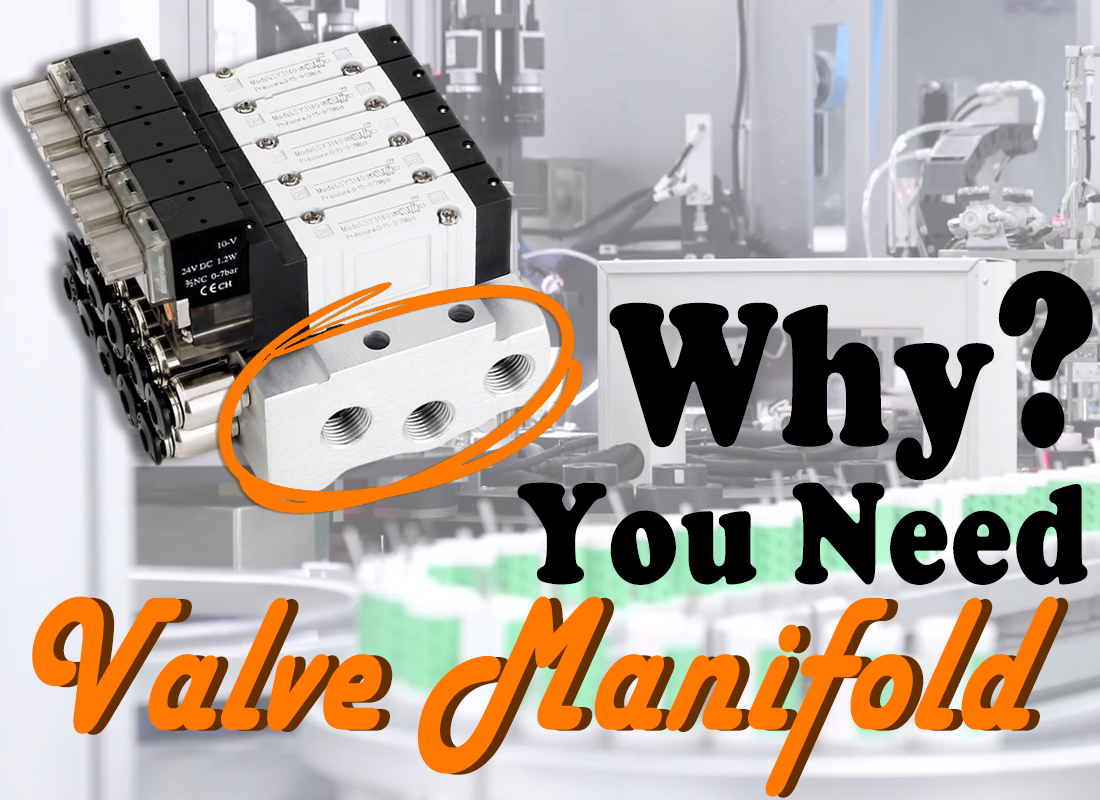
In modern pneumatic automation systems, a valve manifold / solenoid valve manifold is an essential integration component. In traditional setups, each solenoid valve requires separate air supply and exhaust connections, along with silencers. While manageable for a few valves, when dozens of valves are used, the piping becomes extremely complex—like the tangled wires behind multiple computers.
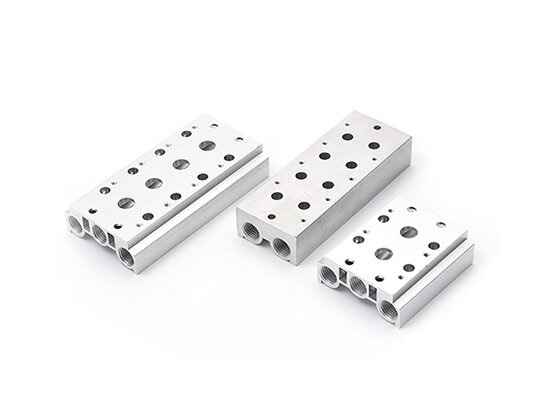
A solenoid valve manifold allows multiple solenoid valves to be mounted on a single block. It requires only one main inlet and two main exhaust ports. This solution is not only compact and tidy but also reduces the cost of silencers, fittings, and tubing. Moreover, maintenance and system expansion become easier: individual valves or modules can be replaced without dismantling the entire piping network.
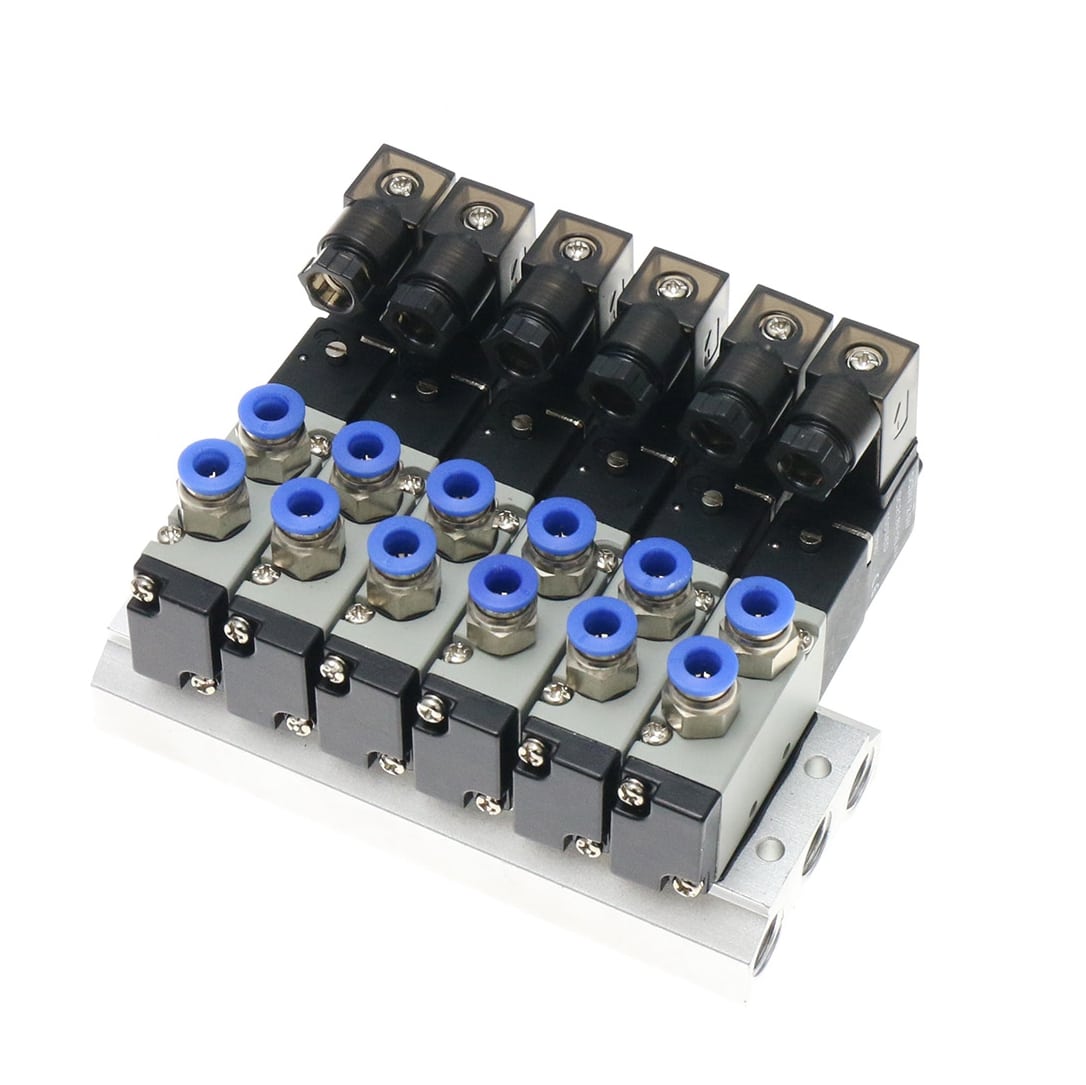
① Simplified Piping and Air Lines – centralized control reduces tubing length and connection points.
② Space Saving – modular design fits compact devices or control cabinets.
③ Cost Reduction – fewer silencers, fittings, and piping materials required.
④ Maintenance Efficiency – faulty valves or modules can be swapped quickly.
⑤ System Standardization – ISO or DIN standard interfaces facilitate PLC and control system integration.
| Parameter | Description | Notes |
|---|---|---|
| Number of Solenoid Valves | 4–16 valves | Modular design allows flexible expansion |
| Air Supply Port | 1 main inlet | Connects to main compressed air source |
| Exhaust Ports | 2 main outlets | Usually fitted with silencers |
| Mounting Standard | ISO 5599 / DIN 24340 | Ensures compatibility with valves and actuators |
| Material | Aluminum / Stainless Steel | Lightweight and corrosion-resistant |
| Application | Automation, HVAC, Water Treatment | Supports industrial control systems |
◆ Industrial Automation – controlling cylinders, angle seat valves, ball valves, and other actuators
◆ Water Treatment Systems – centralized control of multiple water valves
◆ HVAC Systems – centralized management of air and water valves
◆ Chemical and Oil & Gas Industries – pneumatic process control and multi-point regulation
By using a valve manifold, engineers can design modular and standardized systems, while helping distributors and end users reduce complexity and maintenance costs.
(FK9025)
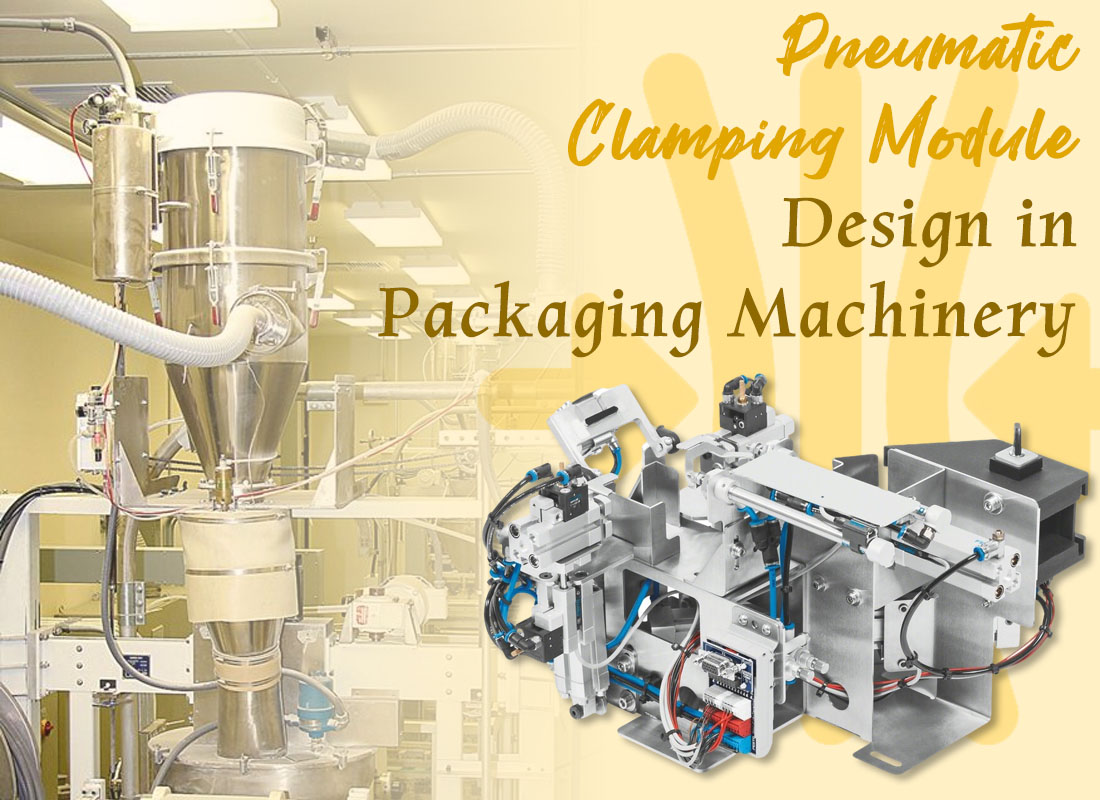 Pneumatic Clamping Module Design in Packaging Machinery
 Pneumatic Fittings Replacement Cycle: How Often Should You Change Pneumatic Fittings
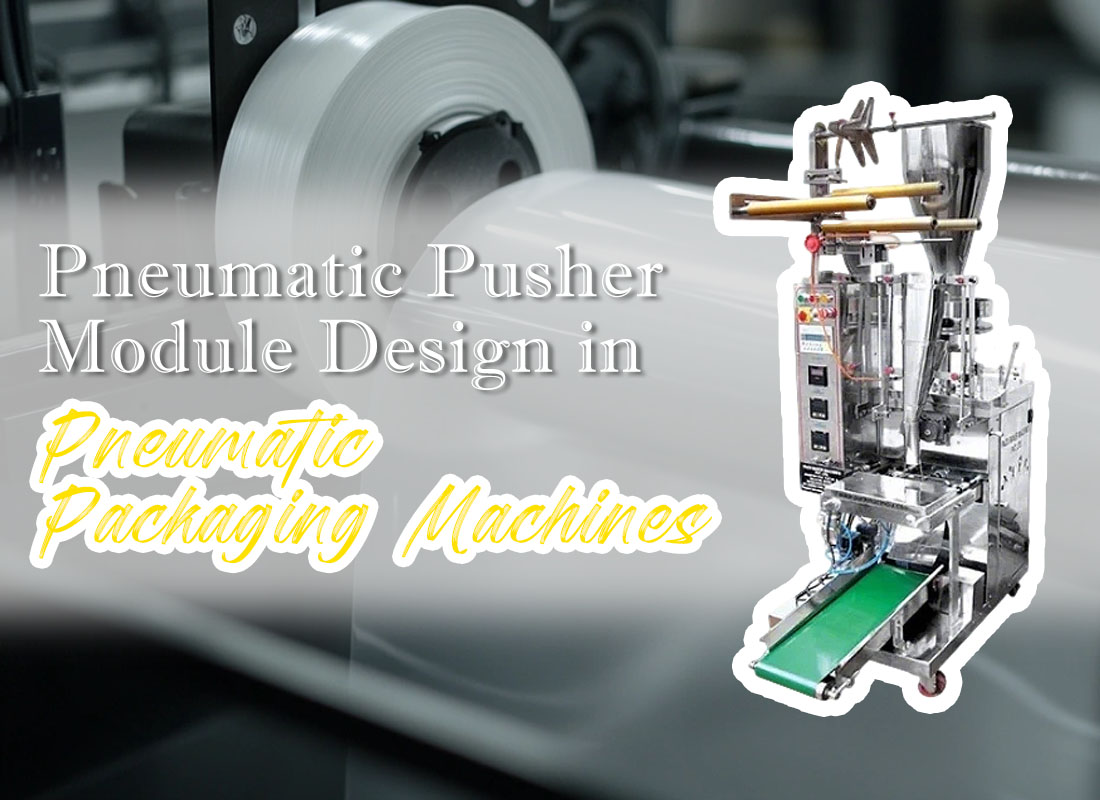 Pneumatic Pusher Module Design in Pneumatic Packaging Machines
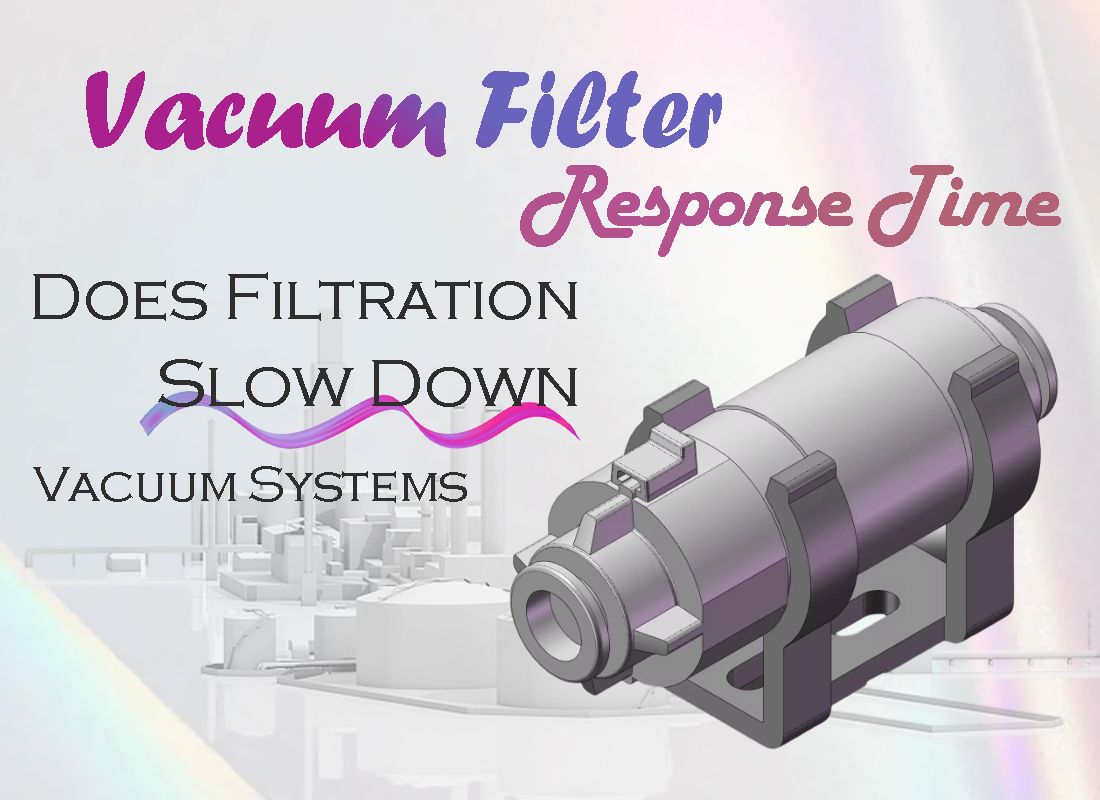 Vacuum Filter and Response Time: Does Filtration Slow Down Vacuum Systems
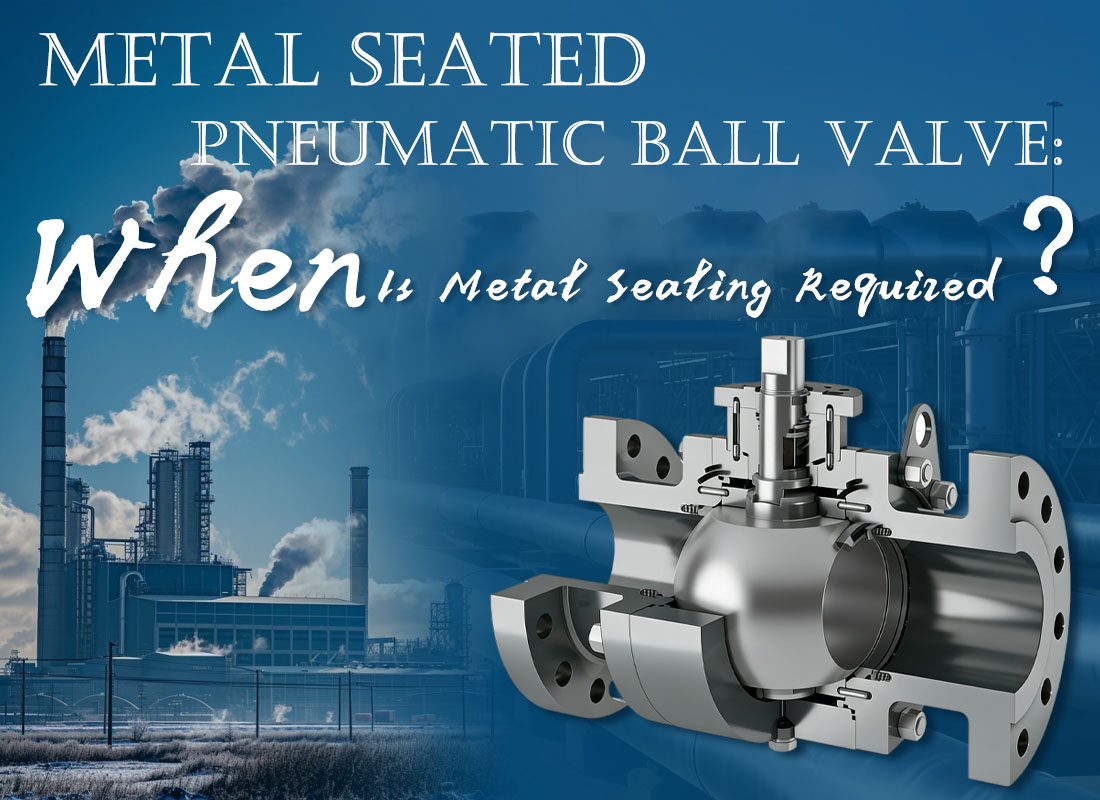 Metal Seated Pneumatic Ball Valve: When Is Metal Sealing Required?

Whatsapp QR:

WeChat QR:

Tell us about your application requirements. Our engineers will review your project and provide practical feedback within 1–2 working days.

Fescolo is the specialized custom pneumatic cylinder brand operated by Ningbo Fokca Automation Co., Ltd.
Looking for standard pneumatic and automation components?
Visit Fokca
© 2026 Ningbo Fokca Automation Co., Ltd. All Rights Reserved. Sitemap