Feb 03, 2026
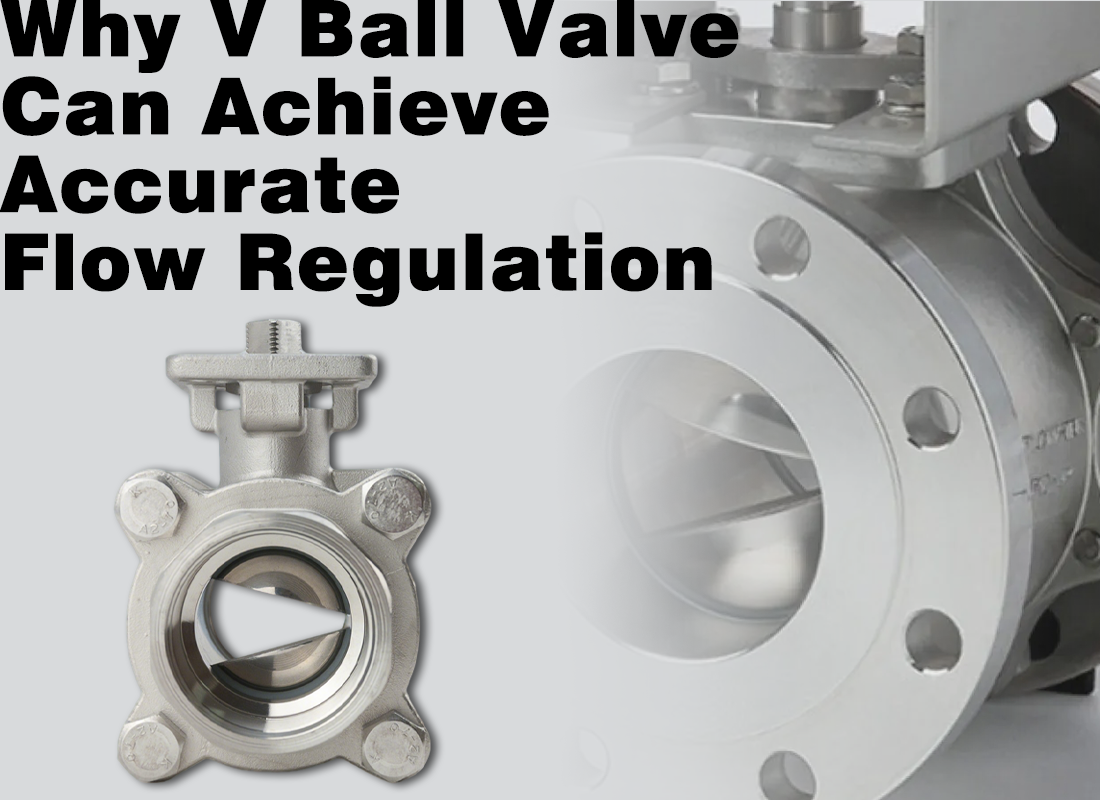
In industrial automation, conventional ball valves are generally regarded as on–off components rather than regulating devices. However, the V ball valve is fundamentally different. Thanks to its unique V-shaped port inside the ball, it can provide stable and predictable flow control, which ordinary ball valves cannot achieve.
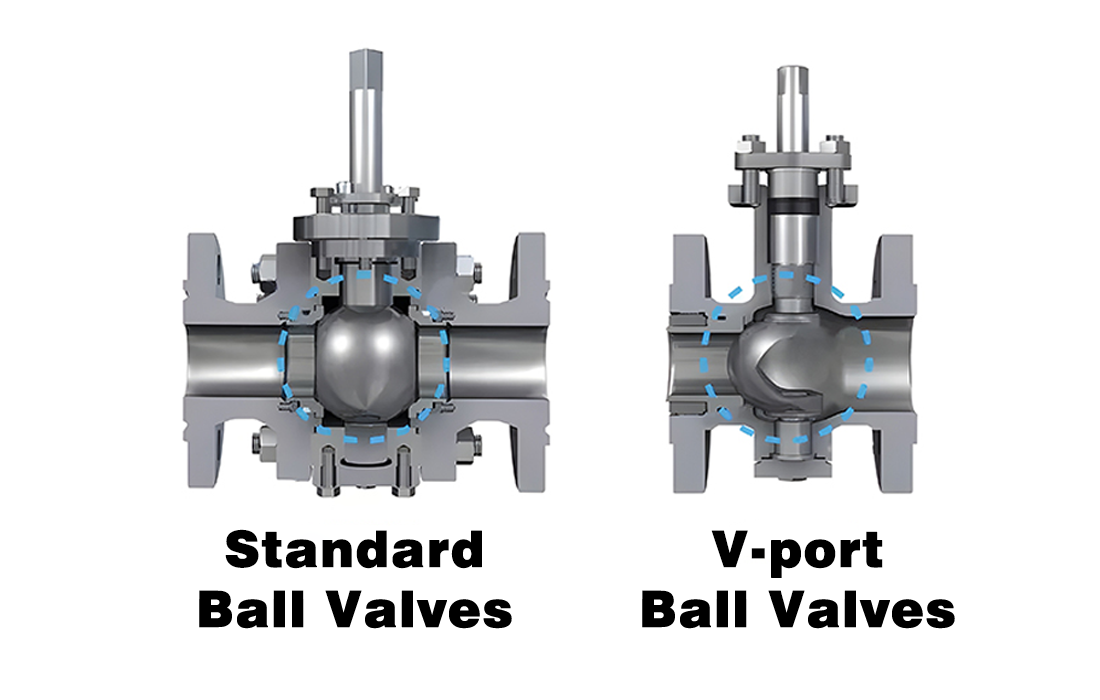
A standard ball valve uses a round bore. Once the ball rotates slightly, a large opening appears immediately, and the flow increases sharply. The relationship between opening angle and flow rate is highly nonlinear, making precise control difficult. Therefore, traditional ball valves are mainly used for full-open or full-close applications.
The V-port ball valve, on the other hand, adopts a triangular or V-shaped notch. At small openings, the medium passes through a narrow tip of the V shape, and the flow grows gradually. This design creates a highly predictable correlation between valve opening and flow, enabling the valve to act as an accurate flow control ball valve.
In many processes such as chemical dosing, HVAC water balancing, and compressed air regulation, the valve usually works at partial openings. With a normal ball valve, a tiny movement may cause a large flow jump. With a pneumatic V-port ball valve, the change is smooth and linear, which allows control systems to maintain stable feedback.
The sharp edge of the V notch provides a shearing action during rotation. This feature makes the V-type ball valve for chemical process more suitable for media containing fibers or particles. It also reduces cavitation and erosion compared with ordinary round-port valves.
| Valve Type | Opening Shape | Flow Characteristic | Suitable Purpose |
|---|---|---|---|
| Standard Ball Valve | Round | Sudden increase, unpredictable | On–off isolation |
| V-port Ball Valve | V-shaped | Near linear, controllable | Modulating control |
When combined with a V port ball valve actuator and positioner, the valve becomes a reliable part of V ball valve automation systems. Proper ISO5211 mounting V ball valve platforms simplify installation of V-ball valve pneumatic actuator, making the solution flexible for different industries from HVAC to chemical processing.
◆ Check V ball valve flow characteristic curves rather than only CV value
◆ Confirm V ball valve torque requirement for actuator sizing
◆ Choose correct DN25-DN200 V-port ball valve specs according to pipeline
◆ For precise tasks, use V ball valve with positioner pneumatic
The ability of a V-port structure to transform rotary motion into a predictable flow window is the real reason behind its success. Instead of behaving like a simple switch, the pneumatic V ball valve becomes a true regulating element, ideal for modern process automation.
(FK9025)
 Pneumatic Clamping Module Design in Packaging Machinery
 Pneumatic Fittings Replacement Cycle: How Often Should You Change Pneumatic Fittings
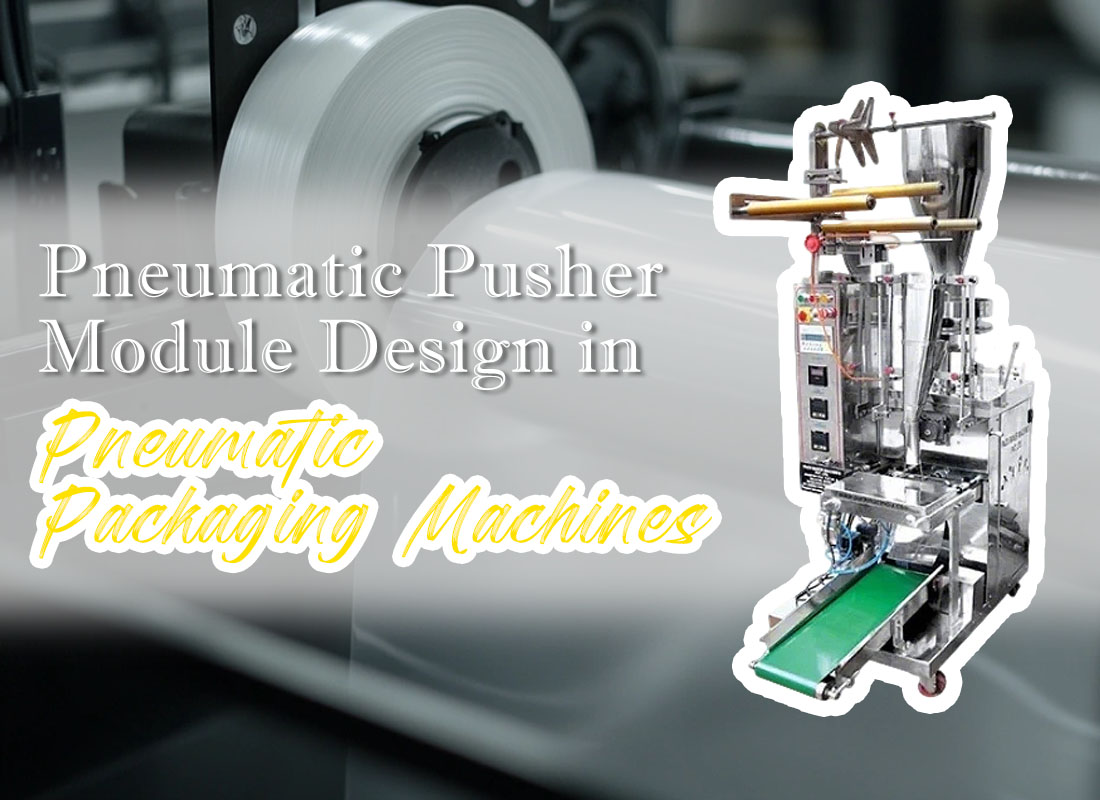 Pneumatic Pusher Module Design in Pneumatic Packaging Machines
 Vacuum Filter and Response Time: Does Filtration Slow Down Vacuum Systems
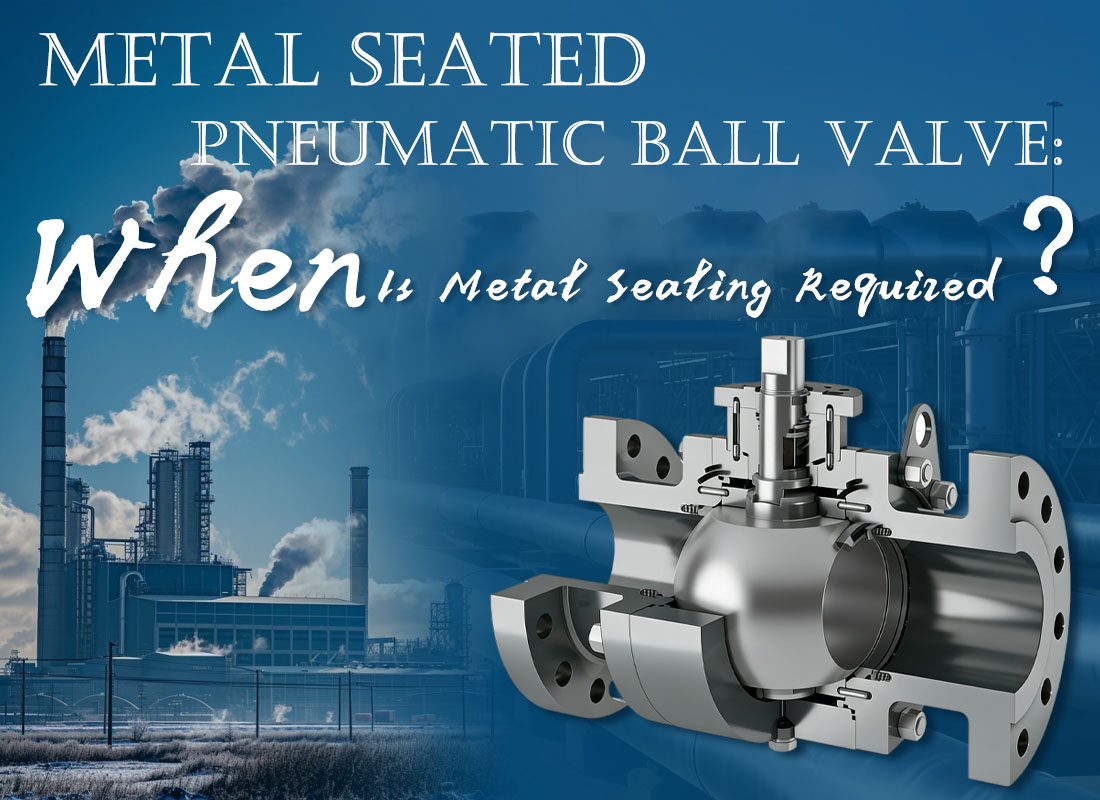 Metal Seated Pneumatic Ball Valve: When Is Metal Sealing Required?

Whatsapp QR:

WeChat QR:

Tell us about your application requirements. Our engineers will review your project and provide practical feedback within 1–2 working days.

Fescolo is the specialized custom pneumatic cylinder brand operated by Ningbo Fokca Automation Co., Ltd.
Looking for standard pneumatic and automation components?
Visit Fokca
© 2026 Ningbo Fokca Automation Co., Ltd. All Rights Reserved. Sitemap