Mar 10, 2018
With the development of modern industry and pneumatic systems, the importance of pressure regulators has increased significantly. They not only stabilize pressure, protect equipment, and save energy, but also play a crucial role in ensuring precision and safety in modern industrial applications.
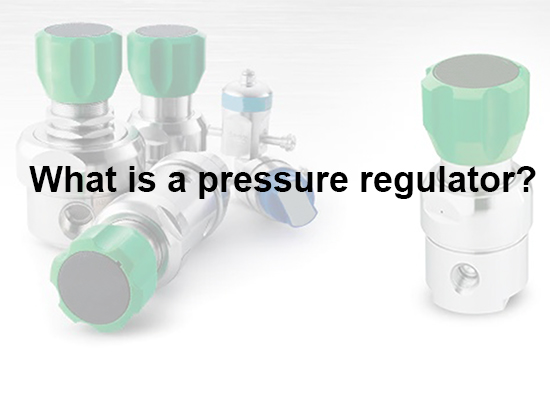
A pressure regulator is typically used to reduce and stabilize the higher, fluctuating pressure from an air compressor or other gas supply system to the working pressure required by the equipment, while also preventing excessive downstream pressure. It is commonly referred to as a pressure reducing valve or pressure control valve. Next, I will primarily introduce the advantages and basic working principles of pressure regulators.
Pressure regulators can be categorized into four types: FRL unit regulator, the high-pressure regulator, the digital/electronic regulator, and the gas pressure regulator. All of these belong to the category of mechanical pressure-regulating valves and operate based on the force-balance feedback principle to stabilize downstream pressure.
◆ Stable output pressure
◆ Protect downstream pneumatic components,
◆ Improve energy efficiency
◆ Enhance process accuracy
◆ Ensure system safety
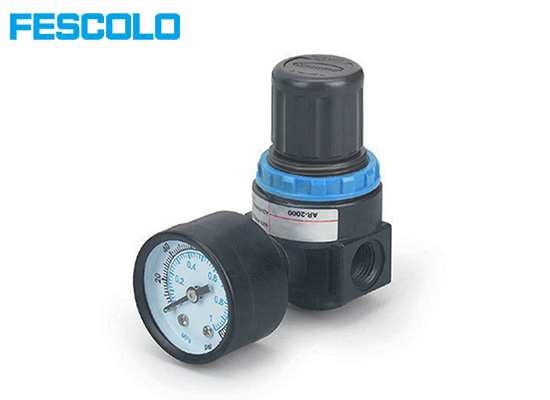
An air regulator is used on an air compressor, compressed air flows from the reservoir of the compressor into the regulator.Like a pressure regulator in a hydraulic press, the air regulator is essentially a valve that reduces or increases air pressure by redirecting the air flow.
Of course, the technology level entering the field has continuously developed into a tool that allows all kinds of innovation.

The regulator is typically installed between the compressor tank and the air hose or tool.
It consists of an internal spring, diaphragm, and control knob.
When the control knob is adjusted, the spring tension changes, which alters the opening size of the internal valve.
This adjustment controls the flow of compressed air, allowing more or less air to pass through and regulating the pressure at the outlet.
This article uses three stages to explain to you exactly how an air pressure regulator works.
◆ Protects Tools and Equipment – Most pneumatic tools have specific pressure requirements. Supplying air at the correct pressure prevents damage and ensures optimal performance.
◆ Prevents Overload – Excessive pressure can cause wear, malfunction, or even safety hazards.
◆ Improves Efficiency – Maintaining stable pressure reduces air loss and ensures consistent tool operation.

Proper adjustmen of the air compressor regulator ensures that the connected tools receive the correct pressure for optimal performance. Here's a step-by-step guide:
Before adjusting the regulator, turn off the air compressor and release any built-up pressure in the system to prevent accidental discharge.
The regulator is usually located near the pressure gauge on the air compressor.
It often features a round or knob-like control for easy adjustment.
◆ Increase Pressure: Turn the knob clockwise to increase the output pressure.
◆ Decrease Pressure: Turn the knob counterclockwise to reduce the output pressure.
◆ Monitor the pressure gauge while adjusting to reach the desired pressure level.
◆ After adjusting, power on the air compressor and allow it to pressurize.
◆ Use a connected tool to check if the pressure is stable and adequate.
◆ Fine-tune the regulator if necessary for precise pressure control.
Some regulators have a locking mechanism or a set screw to secure the setting and prevent unintentional adjustments.
Ensure the regulator is locked in place once the pressure is properly set.
◆ Regular Cleaning – Dirt and debris can accumulate inside the regulator and affect its performance. Clean it periodically.
◆ Check for Leaks – Inspect the regulator and its connections for leaks to prevent pressure loss.
◆ Monitor Pressure Gauges – Consistently monitor the pressure levels to ensure the regulator is functioning correctly.
◆ Replace Worn Parts – If the regulator spring or diaphragm shows signs of wear, replace them to maintain accuracy and performance.
The air regulator uses a series of springs and a diaphragm to provide a constant air pressure level "downstream" regardless of any changes in the supply from the tank or upstream supply.We can also supply the SMC Air cylinder, Globe Valve etc. Welcome to contact us.

Whatsapp QR:

WeChat QR:

Tell us about your application requirements. Our engineers will review your project and provide practical feedback within 1–2 working days.

Fescolo is the specialized custom pneumatic cylinder brand operated by Ningbo Fokca Automation Co., Ltd.
Looking for standard pneumatic and automation components?
Visit Fokca
© 2026 Ningbo Fokca Automation Co., Ltd. All Rights Reserved. Sitemap